If you are moving to Akabane, Oji, Takinogawa or Tabata and searching for an international school, you have probably already discovered the frustrating part: most search results serve up English conversation classes and after-school clubs, not schools your child can actually attend every day. Here is the straight answer. Kita Ward (Kita-ku), in northern Tokyo, has four genuine international schools — and unlike most of Tokyo’s 23 wards, one of them is a large, full-day school running all the way from age three to graduation. But there is a catch that no listicle will tell you, and it changes everything about how you should plan. This guide covers all four schools with fees from official sources, the age-by-age reality, what happens if you widen the search to neighbouring wards, and one alternative worth knowing about.
Quick Answer: Your Options in Kita Ward, Tokyo
- Lycée Français International de Tokyo (LFI Tokyo) | Ages 3–18 | Approx. ¥1.73M–¥2.10M per year | Takinogawa, Kita-ku. Maternelle through Terminale, French Baccalauréat, with a sports field, gym and swimming pool. The ward’s only large full-day school.
- EIFJ Tokyo (École Internationale Franco-Japonaise) | Ages 18 months–15 (high school opening September 2026) | Fees published as a downloadable schedule — contact the school | Nishigaoka, Kita-ku. Runs both a French–English bilingual track and an English + Japanese track.
- American Lycetuff International Pre-school | Ages 2–6 (plus elementary classes) | ¥19,500–¥103,000 per month plus enrolment fees | Akabane-Nishi, Kita-ku. IPC curriculum, 1–5 days a week.
- FUTURE Jidoen Tabata | Ages 2–6 (plus after-school for Grades 1–6) | Contact the school | Tabata-Shinmachi, Kita-ku. English immersion, open 7:30–19:00 on weekdays.
- NIJIN GLOBAL ACADEMY (online / opening September 2027 · ages 6–18 · aiming for roughly one-fifth the cost of an in-person international school · Japanese-language support built in) | No commute | Pre-launch: currently collecting sign-ups for opening updates.
Note: all fees reflect publicly available information as of August 2026. Always confirm current figures directly with each school.
International schools in Kita Ward, Tokyo: the landscape and what fees actually look like
One quick clarification before anything else. Several Japanese cities have a ward called Kita — Osaka and Kobe among them — so search results tend to blend them together. Everything in this guide refers to Kita Ward in Tokyo (Kita-ku, one of the 23 special wards, covering Akabane, Oji, Jujo, Takinogawa and Tabata).
Kita is an unusual ward. Across most of Tokyo’s 23 wards the pattern is the same and slightly depressing: several international preschools, then a cliff, then one full-day school for primary age if you are lucky. Kita has the preschools too — but it also has a genuine, large, thirteen-year school inside its own boundaries. Lycée Français International de Tokyo in Takinogawa has capacity for around 1,395 students, 125 teachers, average class sizes of about 25, a sports field, a gymnasium, a swimming pool and a school bus service. Very few wards in northern Tokyo can say that.
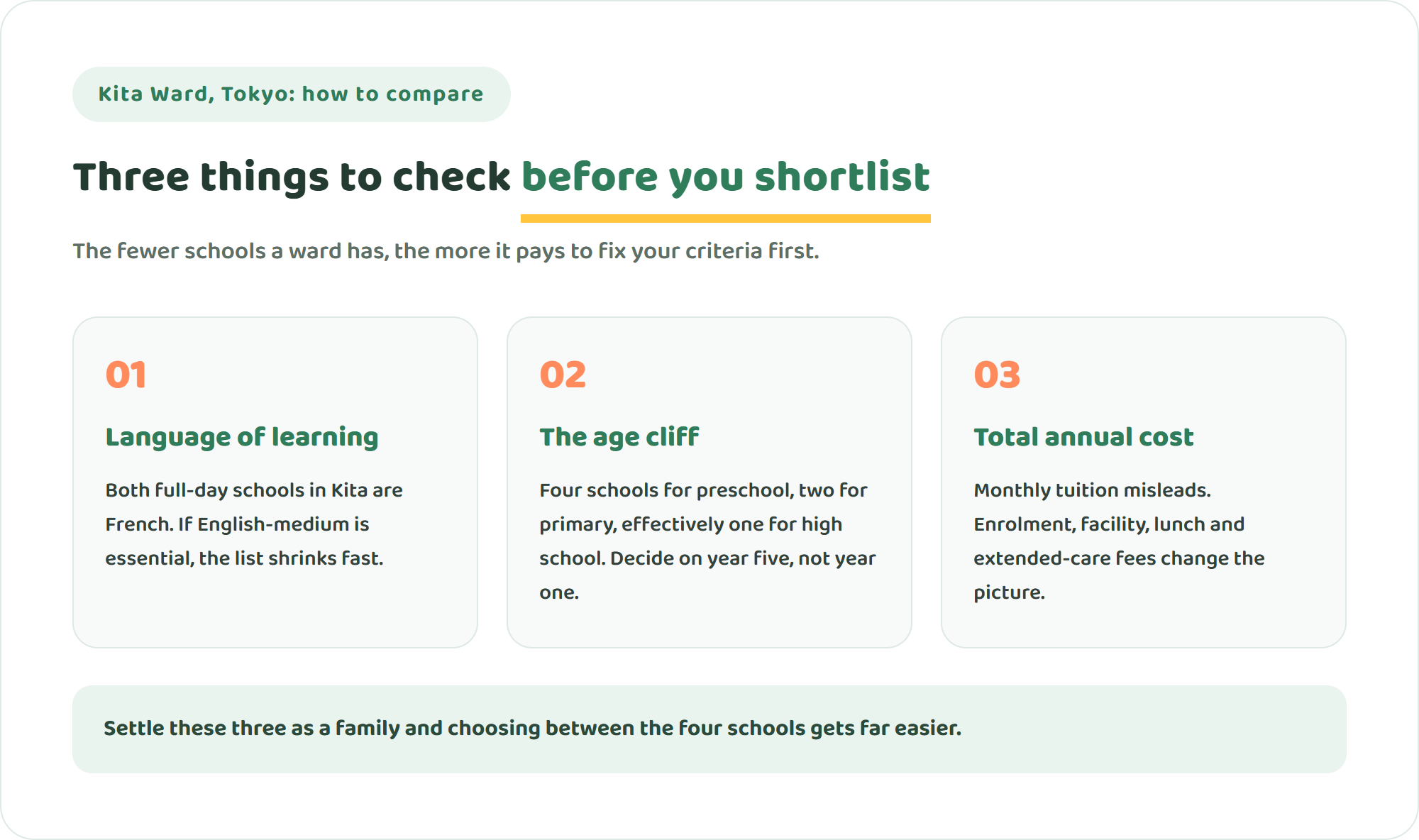
Now the catch. Both of Kita Ward’s full-day international schools are French. LFI Tokyo follows the French Ministry of Education curriculum and prepares students for the French Baccalauréat; French is the primary language of instruction, with English, Japanese, Spanish and German offered as language pathways. EIFJ in Nishigaoka builds on the same French framework, layered with the IB Primary Years Programme, US Common Core for English and MEXT standards for Japanese. So if what you actually want is an English-medium American, British or IB day school in Kita Ward, the honest count is close to zero. Families who miss this detail spend months on the wrong shortlist.
On cost: the Tokyo Metropolitan Government’s international schools portal lists LFI Tokyo’s annual fees as ¥1,822,585 for kindergarten, ¥1,734,249 for elementary, ¥2,005,541 for junior high and ¥2,096,911 for high school — broadly ¥1.7M–¥2.1M a year, with fees varying by nationality and programme, so confirm your own case. Preschools work differently: they price monthly by attendance, from roughly ¥20,000 for one morning a week up to around ¥100,000 for five full days with extended care. Enrolment fees, materials fees, facility fees, lunch and extended hours all sit on top. Comparing monthly tuition alone will always mislead you — our breakdown of international school costs walks through what actually lands on the invoice.
All four international schools in Kita Ward, Tokyo
1. Lycée Français International de Tokyo
The largest international school in the ward, spread across a main building at 5-57-37 Takinogawa and an annexe at 5-44-1. It runs the full French system from maternelle to terminale on one site, which means a child can start at three and leave with a French Baccalauréat without ever changing schools. The student body is predominantly French, but the school is open to families of any nationality who are ready for a French-language education. Facilities are genuinely strong by Tokyo international school standards — a sports field, gymnasium and pool are rare in central wards — and a bus service runs.
- Curriculum: French Ministry of Education programme (AEFE network), French Baccalauréat. Language pathways in French, English, Japanese, Spanish and German
- Ages: 3–18 (maternelle to terminale)
- Fees: Approx. ¥1,822,585 (kindergarten) / ¥1,734,249 (elementary) / ¥2,005,541 (junior high) / ¥2,096,911 (high school) per year, per the Tokyo Metropolitan Government portal. First-year registration fees are additional and rates differ by nationality — confirm with admissions
- Best for: Francophone expat families, families aiming at European universities, and anyone who wants a single school for the whole journey without leaving the ward
- Official website
2. EIFJ Tokyo (École Internationale Franco-Japonaise)
A small trilingual school in Nishigaoka that opened its nursery and elementary sections in 2019, added a middle school in 2022, and is opening a high school programme in September 2026. What makes it relevant to English-speaking families is the structure: alongside the French–English bilingual track, EIFJ offers an English + Japanese track with no French requirement. That makes it, realistically, the one English-medium day-school option inside Kita Ward. It is small — around 102 students from 18 nationalities — which cuts both ways: close attention and a tight community, but a limited peer group and a high school section that is only just beginning.
- Curriculum: French Ministry of Education programme within an IB PYP framework; US Common Core for English; MEXT standards for Japanese
- Ages: 18 months–15 (nursery, kindergarten, elementary, middle school); high school from September 2026
- Fees: Contact the school — the current fee schedule is distributed as a downloadable document. Sibling discounts of 25% and 50%, merit scholarships, and Japanese childcare subsidies are all listed on the official site (the school cites ¥77,000–¥97,000 per month for ages 3–6 and ¥80,000–¥100,000 for ages 0–2, subject to your municipality’s certification)
- Best for: Families who want English-medium schooling without leaving Kita, who value a small setting, or who are drawn to a genuinely trilingual environment
- Official website
3. American Lycetuff International Pre-school (Akabane)
Located inside the Palroad 3 Loop building right by Akabane Station’s west exit, this preschool runs Pre-Kindergarten, Kindergarten 1 and 2, and Reception, built on the International Primary Curriculum used in schools worldwide. Its most practical feature is flexibility: you choose one to five days a week, mornings only or full days, which lets families combine it with a Japanese hoikuen or yochien rather than committing everything at once. Elementary-age after-school classes are available too.
- Curriculum: International Primary Curriculum (IPC)
- Ages: 2–6 (plus elementary classes)
- Fees: Morning classes ¥19,500 (1 day/week) to ¥63,000 (5 days with extended hours) per month; full-day classes ¥34,000 to ¥103,000 per month. Enrolment ¥20,000, materials ¥12,000, facility fee ¥20,000. Organic lunch ¥2,680–¥13,400 per month; early and late care charged separately. Elementary classes ¥11,000 per month for one session a week plus a ¥7,000 enrolment fee
- Best for: Families near Akabane Station, anyone easing into English one or two days a week, and dual-income households needing extended care
- Official website
4. FUTURE Jidoen Tabata
An English-immersion childcare school in Tabata-Shinmachi whose defining feature is its hours: 7:30 to 19:00, Monday to Friday. For families where both parents commute, that alone can decide the question. Alongside the regular class for ages two to six, it runs an after-school programme from 15:00 to 19:00 for Grades 1 through 6, so children can keep an English environment after they start Japanese elementary school. Admissions for the 2026 intake are open, with school tours and free trial lessons available.
- Curriculum: English immersion with bilingual instruction
- Ages: 2–6 (plus after-school for Grades 1–6)
- Fees: Not published online — contact the school. The site notes eligibility for Japan’s early childhood education subsidy (around ¥37,000 per month for ages 3–5, subject to certification)
- Best for: Families in the Tabata and Oku area, households needing long daycare hours, and parents who want English to continue after elementary school starts
- Official website
The age gap hiding inside Kita Ward’s international school options
Sort those four schools by age and the wall most families hit in year three or four becomes obvious.
- Preschool (ages 2–6): all four schools. Kita is not a poor ward for early years — options are spread across Akabane, Tabata, Nishigaoka and Takinogawa, so something is usually within reach.
- Primary (ages 6–12): two schools — LFI Tokyo and EIFJ. Both French.
- Middle school (ages 12–15): the same two.
- High school (ages 15–18): effectively one — LFI Tokyo. EIFJ’s high school programme starts in September 2026 and has no track record yet.
Add the requirement that most English-speaking families actually have — schooling in English — and the count drops again. In Kita Ward, that leaves EIFJ’s English track, and essentially nothing else. With around a hundred students and a brand-new high school section, committing to thirteen years there is a bigger leap than most families are comfortable making.
One more distinction worth making. Kita has several well-regarded English programmes that are not schools: KIDS TALK near Akabane (running since 1999, with a 9:00–14:00 morning class and afternoon classes capped at eight students), KidsUP Akabane in Naka-Jujo, and Kids Duo in Oji. These are excellent for adding English hours, but they are after-school and supplementary provision used alongside a Japanese school, not day schools. Comparing them like-for-like with LFI Tokyo will lead you to the wrong decision.
Widening the search: international schools near Kita Ward
Kita borders Itabashi, Toshima, Arakawa, Adachi and Bunkyo, and it is well connected — the Toei Mita Line, Keihin-Tohoku Line, Saikyo Line and Namboku Line all run through it. Stop drawing the boundary at the ward line and think in terms of a 30–45 minute radius, and the picture changes considerably.
Itabashi, immediately west, has a full-day international school covering Grade 1 through Grade 12 — reachable from Akabane, Jujo and Takinogawa. We cover all eight of its schools in our guide to international schools in Itabashi. To the south, Bunkyo has a full-day elementary option in Hakusan plus a high-school pathway (international schools in Bunkyo). Further west, Nerima’s Hikarigaoka campus offers an English-medium IB pathway from kindergarten through Grade 9 and is accessible from north-west Kita via the Oedo and Yurakucho lines (international schools in Nerima). For the wider picture, see our overview of international schools in Tokyo.
But be honest with yourself about the commute. Forty minutes each way is eighty minutes a day — around 270 hours over a 200-day school year. For a seven-year-old, that is not a rounding error. There is a real gap between a school being available and a school being sustainable.
How to work out which option actually fits your family
Families get stuck because they gather information before deciding what they are comparing. Reverse it. Pick the one or two things you genuinely will not compromise on, then look at schools. Do it the other way round and every school looks good and every school looks insufficient.
For families in Kita Ward, the non-negotiable usually turns out to be one of four things. Does the teaching language need to be English, or is a French-plus-English-plus-Japanese environment welcome? Can you sustain ¥1.7M–¥2.1M a year for a decade or more? Is the school somewhere your child can travel to independently as they grow? And how much Japanese-language education do you want to preserve? If any one of those is a hard no, the in-ward day schools are not your answer — and that is a fact about the local landscape, not a failure on your part.
If cost is the sticking point, our piece on whether international school is too expensive reframes the maths. And if you want to see what a school without a campus actually looks like day to day, see how learning works online →
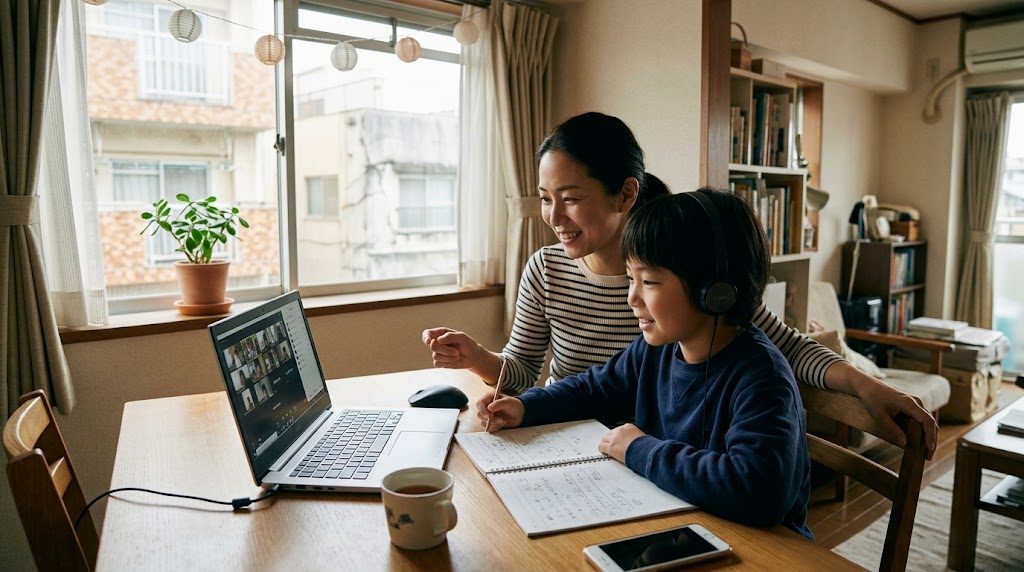
When fees or commuting close the door: online as a fifth option
If you have read through Kita’s four schools and thought none of these quite works for us, that instinct is accurate rather than pessimistic. Two French day schools at ¥1.7M–¥2.1M a year, with one English-medium track between them, is a narrow opening.
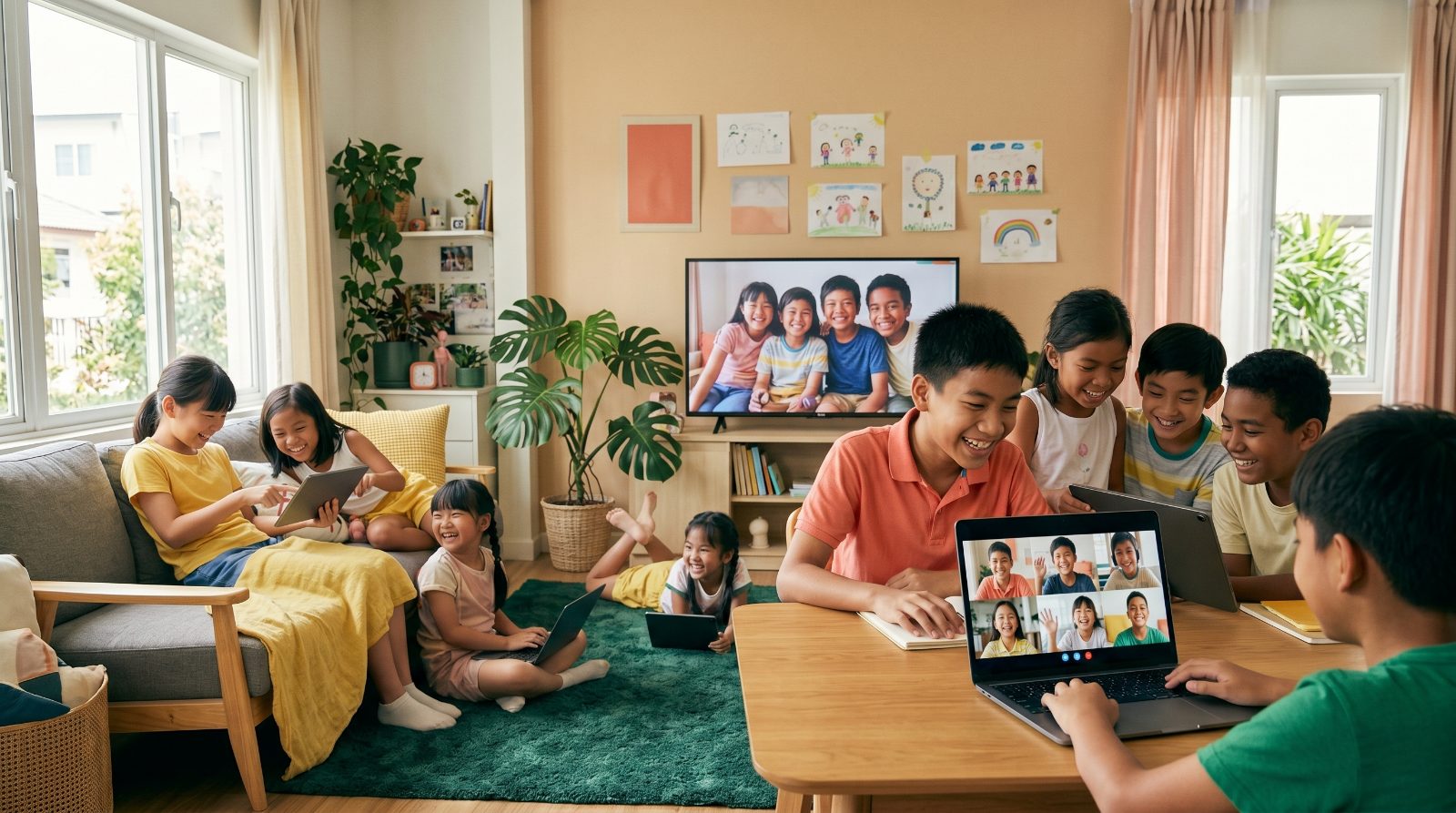
NIJIN GLOBAL ACADEMY is an online international school opening in September 2027, operated by NIJIN Inc. in Japan. Our alternative school in Japan, NIJIN Academy, already has more than 1,000 students enrolled. We serve ages 6 to 18 across Asia and Oceania, and we are aiming to keep fees at roughly one-fifth of an in-person international school.
What we care about: not ranking children by test scores, keeping groups small enough that dialogue is the main activity, and helping every student come to like themselves and the world. Because we assume Japanese-language support from the start, a child who speaks no English yet can still walk through the door. Families worried specifically about maintaining their child’s Japanese may also want to look at our sister service, Tomodachi Japan (online Japanese for children, also run by NIJIN).
And the honest caveats. We have not opened yet, so we have no graduate outcomes to show you. Online is not the same experience as in-person: we cannot give your child the sports field in Takinogawa or the same classmates sitting beside them every morning in Akabane. What we can do is make sure that where you live and what you can spend are not the things that decide what your child gets to learn.
Frequently asked questions
Q. What is the youngest age international schools in Kita Ward accept?
A. EIFJ’s nursery takes children from 18 months, the earliest in the ward. American Lycetuff and FUTURE Jidoen Tabata start at age two, and LFI Tokyo’s maternelle begins at three. All four have capacity limits and entry conditions that shift year to year, so check availability for your child’s specific year group when you book a tour.
Q. We don’t speak French. Can we still use a full-day school in Kita?
A. Yes, but the realistic route is EIFJ’s English + Japanese track, which has no French requirement. LFI Tokyo follows the French national curriculum and expects students to be ready to learn in French. Both schools include Japanese in the programme, so Japanese-language development is not lost either way. Language-support arrangements vary by year group, so confirm details directly with admissions before you plan around them.
Q. Can children transfer in mid-year, and when is the best time to apply?
A. Both French-system schools run a September-to-June academic year, so September entry is when the most places move. Mid-year transfers happen when spaces open up, but they are not guaranteed. The two preschools are far more flexible, accepting new children monthly and offering trial sessions. If you are aiming at a day school, start the conversation about a year before your target start date.
A short list is not the same as no options
If you have got this far, you have done the research. You have probably also worked out that Kita Ward’s list is shorter than you hoped. That is not a reflection of your effort, and it is certainly not a reflection of what your child is capable of. Two full-day schools, both French, is a fact about the map — nothing more.
The goal was never to choose one school from a list of seven. It is to find one place where your child thinks: I can learn here. That might be a school in Kita, a school one ward over, or a classroom that exists online. Whichever it turns out to be, the hours you are spending on this now will reach your child.
International Schools in Other Cities
- International Schools in Kobe: All 20 Schools
- International Schools in Yokohama: Full Comparison
- International Schools in Chofu and ASIJ Fees
- International Schools in Fukuoka: Fees
- International Schools in Ho Chi Minh City
- International Schools in Melbourne
- International Schools in Chuo, Tokyo
- International Schools in Dubai: Fees
- International Schools in Edogawa, Tokyo
- International Schools in Tokyo
- International Schools in Minato: Fees
- International Schools in Shibuya, Tokyo
- International Schools in Setagaya: All 14 Schools
- International Schools in Koto, Tokyo
- International Schools in Shinagawa, Tokyo