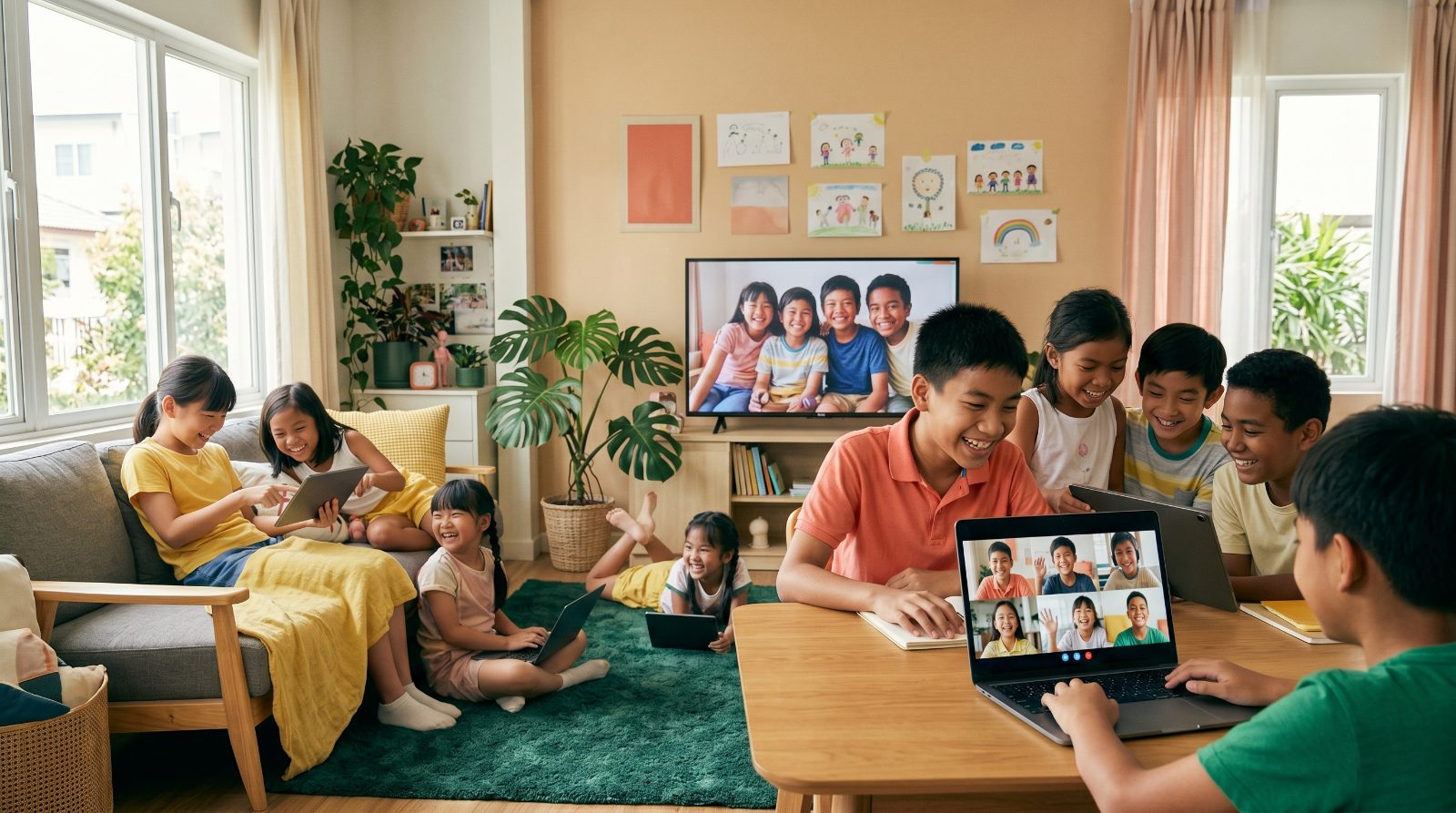
One of the most important things we need to know as teachers is what makes our students curious and excited. Every child is different, and what motivates one child may not interest another. If children cannot connect with a topic, they may struggle to engage with it. You might hear them say, “Why do I need to learn this?” or “That’s boring…” But what if we could turn those reactions into “Wow, this is so much fun!” or “I want to know more!”? That’s where starting with children’s interests can make all the difference.
The key is to use what children already love as a starting point for discovering something new.
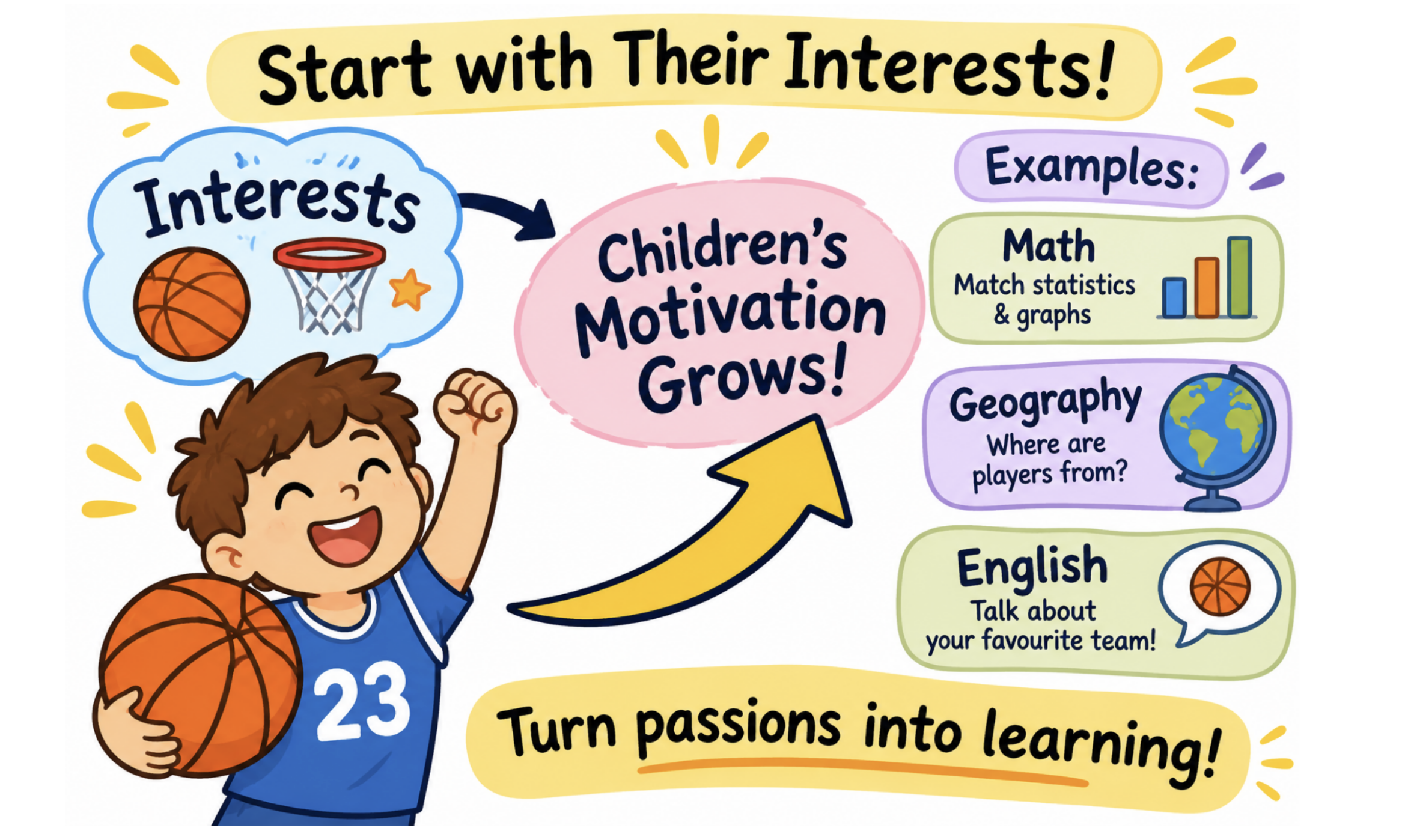
For example, imagine a child who is passionate about basketball. We can use this interest to explore a wide range of subjects.
In mathematics, we could analyse match statistics, calculate scores, compare player performances, or create graphs to explore different data.
In social studies and geography, we could explore the countries where favourite players were born, locate them on a map, and discover cultural differences around the world.
We could also encourage children to speak and participate in discussions by describing players or debating which teams are their favourites.
Suddenly, learning mathematics, geography and English becomes more than just studying a subject. The new ideas are connected to something the child really enjoys. As a result, they will share their ideas with enthusiasm and participate more actively during lessons. What they learn may also be easier to remember because it is connected to something they find interesting. When we enjoy learning about something, it can be easier to understand and remember it.
This approach can be applied to almost any interest: video games, animals, music, art, cooking, space, and much more. By discovering what excites each of our students, we can create learning experiences that feel relevant, engaging, and enjoyable.
Of course, we often have many children in our classes, and the challenge is finding ways to keep them all motivated. We might not always be able to find something that interests every child. However, if we don’t know what they like, we won’t even have the opportunity to try to connect learning with their interests.
When children feel that learning connects with their world, curiosity grows and participation increases. Remember, sometimes the best way to teach something new is to start with something they already love.
Anna Turro Planellas – Teacher