“What is an international school, really?” It’s one of the first phrases you meet when you start thinking about your child’s schooling. You’ve heard the name plenty of times — but the moment you look closer, the types and the fees seem to be all over the place, and it’s hard to tell whether one would even suit your child. If that’s the fog you’re in, you’re in the right place.
In this piece, we’ll explain what an international school is, in plain language — not just the good parts, but the honest cautions around cost and pathways, and who this kind of school actually suits. By the end, you should be able to see the whole landscape of options clearly.
Quick Answer: What an International School Is
If you only read one section, read this. Here is the definition, the main types and the honest trade-offs, before the detail.
- Definition — a school where children learn in English, among diverse peers, with a global-standard curriculum.
- By curriculum — International Baccalaureate (IB), British (Cambridge) and American are the three you will meet most often.
- By how you attend — on campus full time, or online. Online is the newer option and removes the commute.
- Honest cautions — cost, and the pathway back into your home country’s system. Both are covered below.
- Who it suits — decided by fit with your child, not by a ranking.
- NIJIN GLOBAL ACADEMY (online) — ages 6–18 / opening September 2027, currently taking opening-update registrations / fees around one-fifth of a typical campus international school / Japanese-language support. An option when commute or fees are the wall.
What is an international school? A gentle definition first
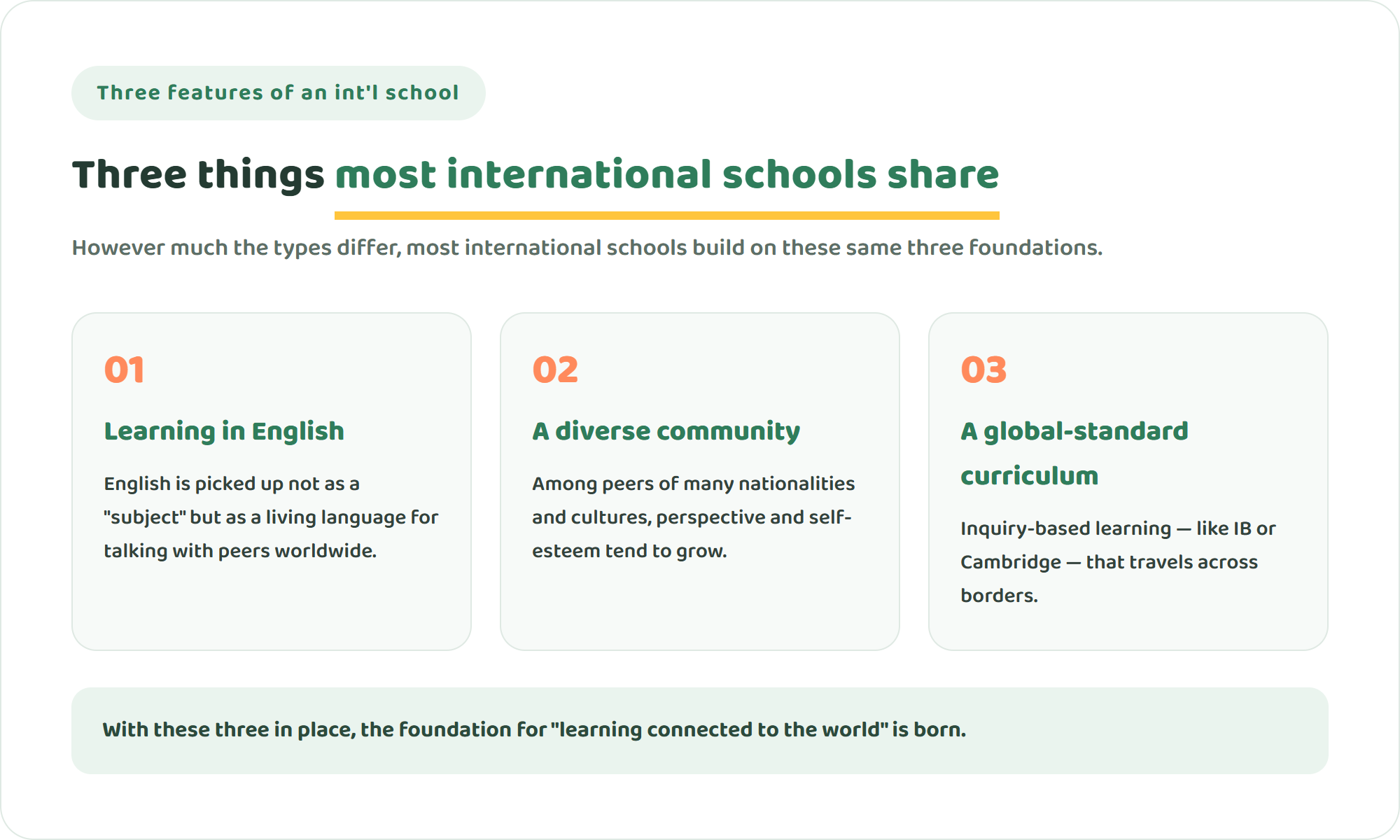
When you search “what is an international school,” what you probably want most is a simple definition. In short, it’s a school that teaches in English (or another shared language) using an international curriculum. These schools first appeared so that children of families living across borders — diplomats, expatriates, globally mobile workers — could keep learning wherever they moved.
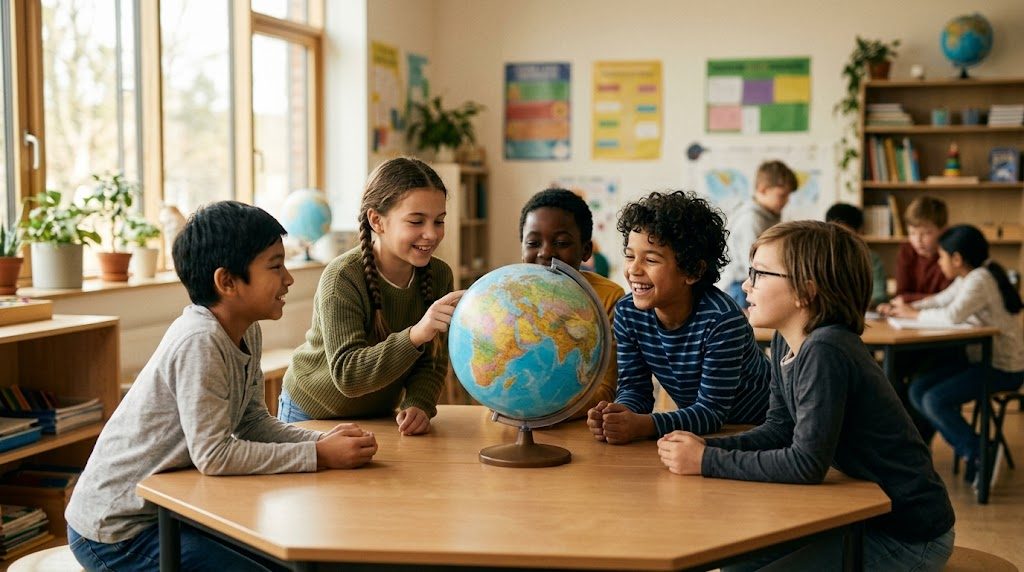
Because of that, an international school can feel quite different from a school following one country’s national curriculum. Lessons are mostly in English; the class brings together children of many nationalities and cultures; and instead of narrowing to one right answer, children are often asked, “What do you think?” The shared aim is a “global standard” of learning that travels across borders — that’s the heart of what an international school is.
Why interest in international schools is rising now
Across Asia and Oceania, parents’ interest in international schools has grown sharply in recent years. A few currents lie behind it.
- “Speaking English” is no longer enough — more parents feel that skills exams can’t measure, such as thinking for yourself and collaborating with different kinds of people, will matter more and more.
- A wish to widen pathways to the world — universities abroad, and ways of working that move between countries, feel closer than before. Many want to open those doors for their child early.
- Another road for children who find “the same as everyone” hard — rather than fitting one mould, more families are looking for a way of learning that fits their own child.
What matters is not “because it’s popular,” but whether it’s truly right for your child. So let’s start by getting to know the types.
The main types of international school
“International school” is one label, but what’s inside varies a lot. It’s easiest to sort them two ways: by curriculum (what you learn with) and by how you attend (how you learn).
By curriculum
- IB (International Baccalaureate) — a globally shared programme that values inquiry and expressing your own ideas over memorisation. It’s widely recognised for applying to universities abroad.
- Cambridge, British- or American-style — curricula based on the UK or US systems, chosen to match the country or direction a child may head toward.
- Original curricula — some schools hold their own philosophy and design a distinctive programme that weaves in international elements.
By how you attend
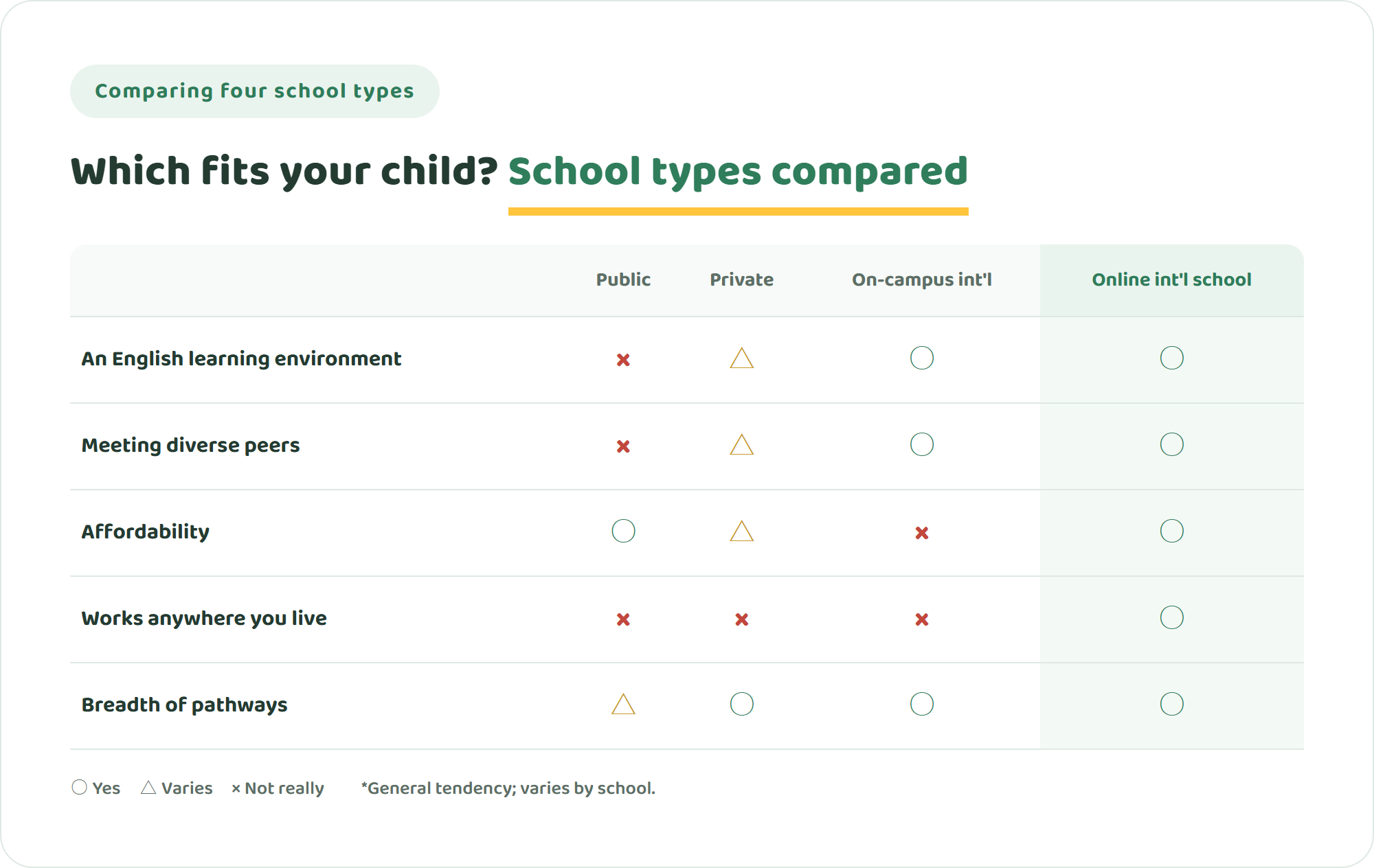
- On-campus (in person) — the familiar type, where children attend a building each day. You share the same space with peers, but it assumes you live in that area.
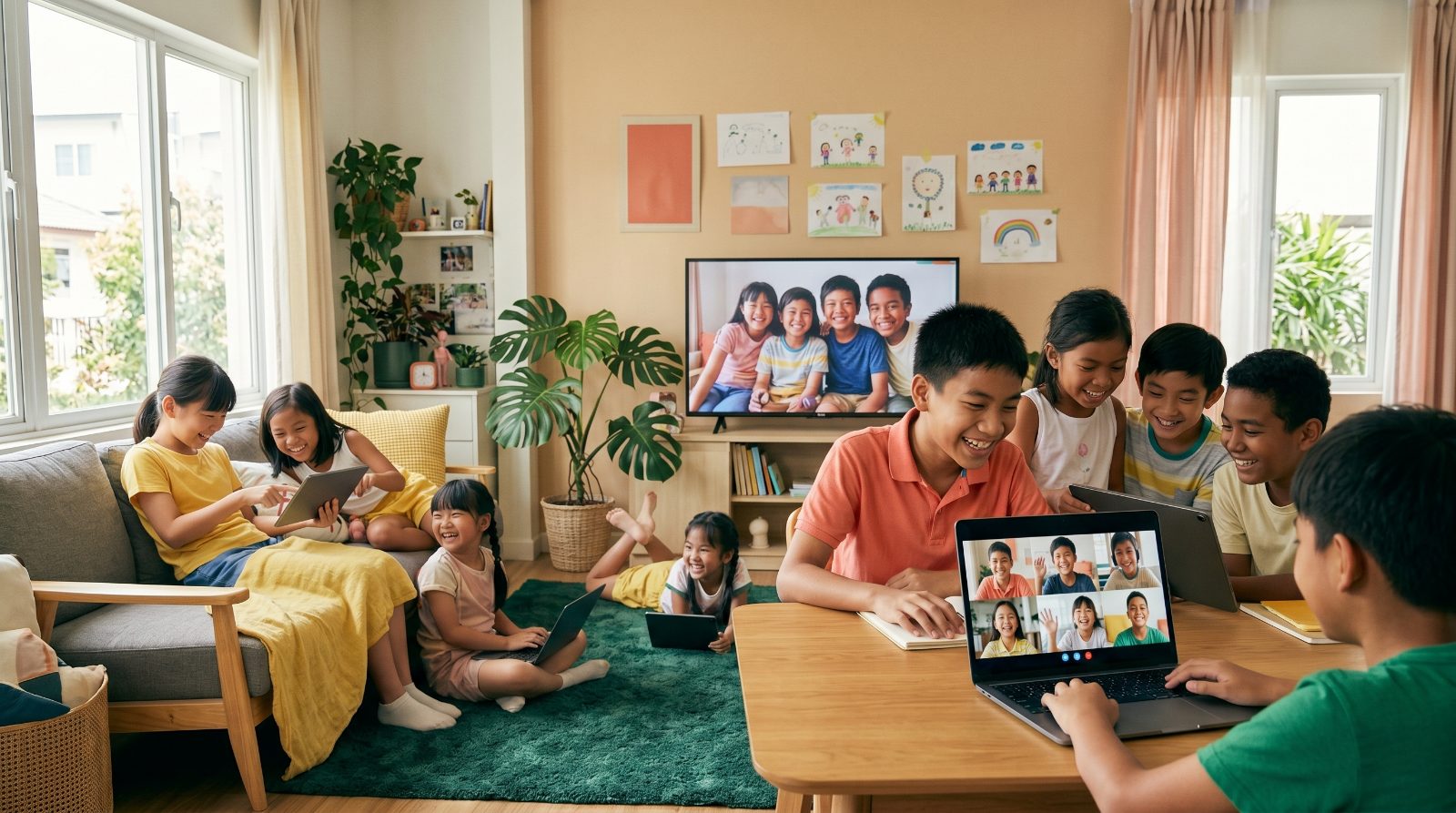
- Online — a newer form where a child connects from home, through the screen, with peers and teachers around the world. It works regardless of where you live and tends to cost less.
“IB or Cambridge,” “on-campus or online” — there’s no single correct answer. The real axis is whether it fits your child’s temperament and your family’s situation. Each type of school is a little stronger at different things.
The benefits — and honest cautions
Sharing only the good parts wouldn’t be honest. So here are both the benefits and the cautions, plainly.
The most commonly cited benefits: English is picked up naturally as a living language rather than a “subject”; a child’s perspective and self-esteem tend to grow among peers from many cultures; and inquiry-based learning helps the ability to think for oneself develop.
At the same time, there are honest cautions.
- Cost — on-campus international schools generally charge higher tuition. Whether your family can keep it up over the long term is worth checking early.
- Differences from a national-curriculum school — because the way of learning differs so much, some bridging may be needed if a child later moves to a local public school.
- Pathways — strong toward universities abroad, but the route can differ from a national exam system. It’s best considered alongside your child’s future picture.
What matters is to weigh the strengths against the concerns and judge whether it fits your child as they are now.

Who does an international school suit?
So which children and families does an international school suit? There’s no absolute answer, but a few tendencies stand out.
- You want to nurture not just exam scores but the ability to think independently and to relate to diverse people.
- You’d like to keep universities abroad, or cross-border ways of working, on the table for the future.
- Rather than fitting “the same as everyone,” you want to find a way of learning that suits your child.
On the other hand, if your strong wish is to stay firmly on a national exam track, or for your child to spend their days with local friends at a neighbourhood school, there’s no need to force an international school. Rather than finding the “right” school, choose the environment that fits your child — that perspective matters most of all.
See how learning works at NGA →
Online — a newer option
Having read this far, you may feel, “I see the appeal, but the cost and the location make it hard.” The option that softens that wall is an online international school.
NIJIN GLOBAL ACADEMY (NGA) is an online international school beyond the exam race, opening in September 2027. Instead of ranking children by test scores, we care about each child learning to love themselves and the world.
- Works wherever you live — anywhere in Asia and Oceania, a child can connect from home with peers around the world.
- A bilingual mentor for every child — even a child new to English is supported in their home language. We don’t force “the same as everyone.”
- Affordable to continue — tuition is around one-fifth of an on-campus international school, and being able to keep going matters just as much.
“Is a brand-new school really safe to trust?” — that’s a natural worry. But NIJIN Academy, the alternative school we run in Japan, already has over 1000 children learning with us. Now we’re bringing that education online, to the world.
How to choose an international school without regret
Finally, here’s what to look at when you’re considering one. Rather than deciding on a glossy brochure or a familiar name, check these points.
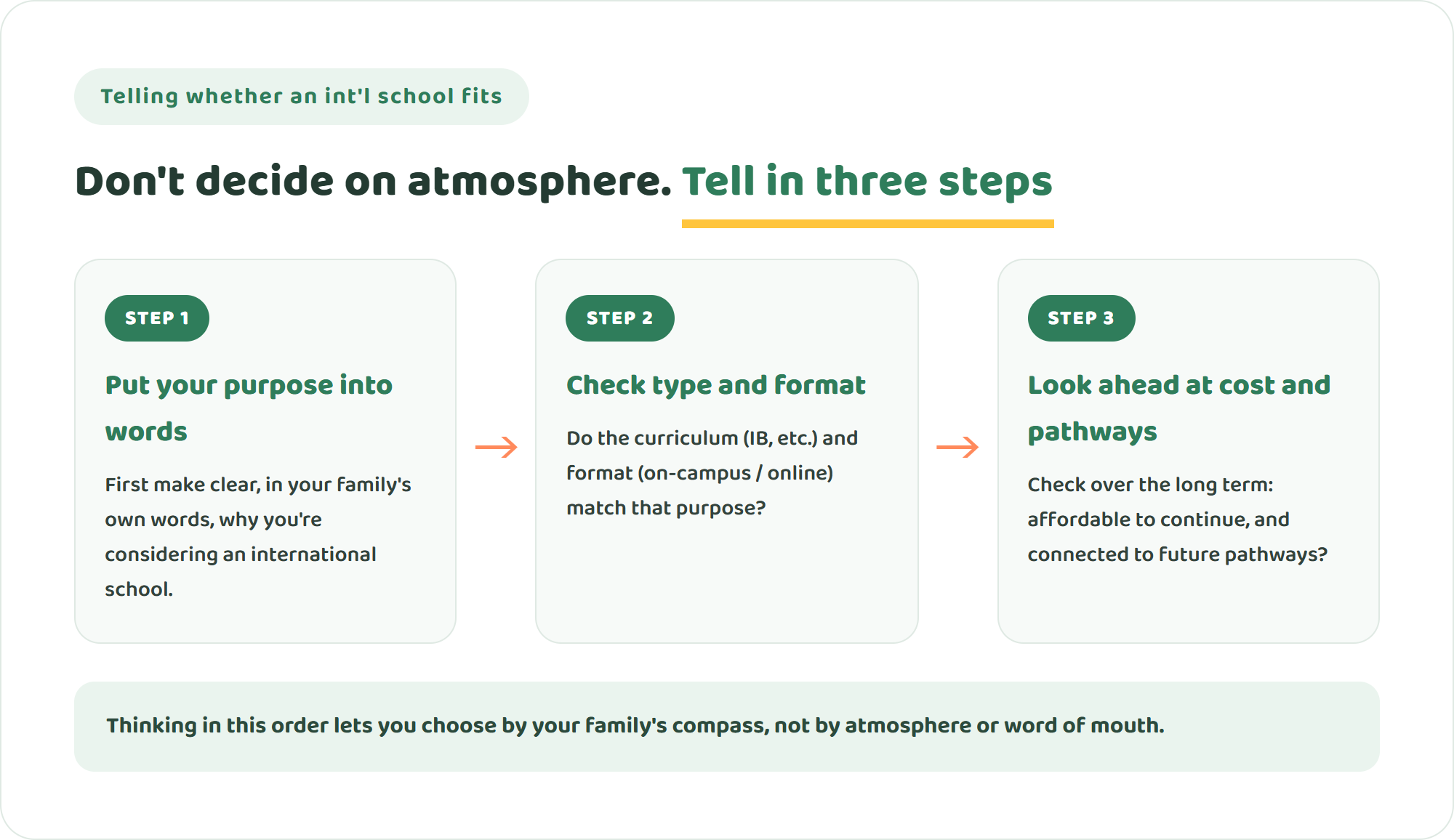
First, put into words why you’re considering an international school at all. Next, check whether the curriculum and format match that purpose. And finally, look ahead over the long term at cost and post-graduation pathways. Thinking in this order lets you choose by your family’s compass, rather than being swayed by atmosphere or word of mouth.
Frequently asked questions
Do you need to speak English to enter an international school?
It depends on the school. Some assume a native level; others are designed for children new to English and guide them into the language step by step. At a school like NGA, where a bilingual mentor supports your child in their home language, a child can start from zero English.
If my child attends an international school, can they still go to a university at home?
Yes, they can. Many children head to universities abroad, but a path to home-country universities remains open too. Because the admissions route can differ from a typical national-curriculum school, it’s reassuring to check early, alongside the pathway your child hopes for.
Can a child really learn well at an online international school?
Yes. Even online, a child connects with peers and teachers around the world and deepens inquiry-based learning. Its strengths are working regardless of location and costing less. That said, the in-person experiences — like running around the same playground — are harder to replicate, so choose based on what fits your child.
Start from “does it fit my child?”
An international school is a school where children learn in English, among diverse peers, with a global-standard curriculum. The types and formats vary, and there’s no single right answer. What matters isn’t the name or the reputation, but the question: does it fit my child as they are now?
NIJIN GLOBAL ACADEMY opens in September 2027. We’ll share the shape of a global education that only online can offer, along with first-cohort enrolment news, straight to your inbox. A global-standard education, within reach for your child.
Get opening updates by email →
Related reading
- List of online international schools in Asia——seven ways to study from anywhere
- International school fees in Asia by country——an honest comparison
- Online high school for expat and globally mobile families——keep learning through every move
- 10 ways to help your child learn English at home——what parents can actually do
- Affordable international schools in Bangkok——fees and alternatives
- What is the International Baccalaureate?——IB vs Cambridge, honestly compared
- 6 international qualifications you can earn online——an honest guide to the pathways
- How much household income do you need for an international school?——the numbers, and what makes it sustainable
- Starting international school from elementary school——what changes, what it costs
- How much does an international preschool cost in Japan?——fees, subsidies and the step after kindergarten
- 7 learning options when school does not fit——compared on cost, peers and attendance
- Online international school pros and cons——five of each, weighed honestly
- How to choose an online international school——five things to verify before you enrol
- A day at an online international school——published lesson hours, time zones and what parents absorb
- Online international schools compared——seven options on curriculum, format and lesson times
- Can you take IGCSE online from Japan?——three routes compared on paperwork, cost and credentials
- Public, private, international or alternative——four criteria that actually decide it