“When is the best age to start learning English for kids?” That question has a way of slipping into a parent’s mind at the quietest moments. You hear that another child has started English lessons and think, “Are we already behind?” — then, in the next breath, “But their first language is still forming; isn’t this too early?” Too early feels risky. Too late feels risky. If your heart keeps swinging between the two, you are far from alone.
Let’s start with the most important thing. There is no single “correct” age when it comes to the best age to start learning English for kids. And the fact that you’re reading this today does not mean you’ve missed your chance — not at all. In this piece, we’ll look honestly at what each age brings, and gently find the thing that matters far more than “what age.”
The best age to start learning English for kids isn’t really about age
Here’s the honest conclusion first. The age at which a child starts English does not decide their future. A child who begins at three won’t automatically excel, and a child who begins at ten hasn’t “missed the boat.” Even the research has grown careful about the simple claim that “earlier is always better.”
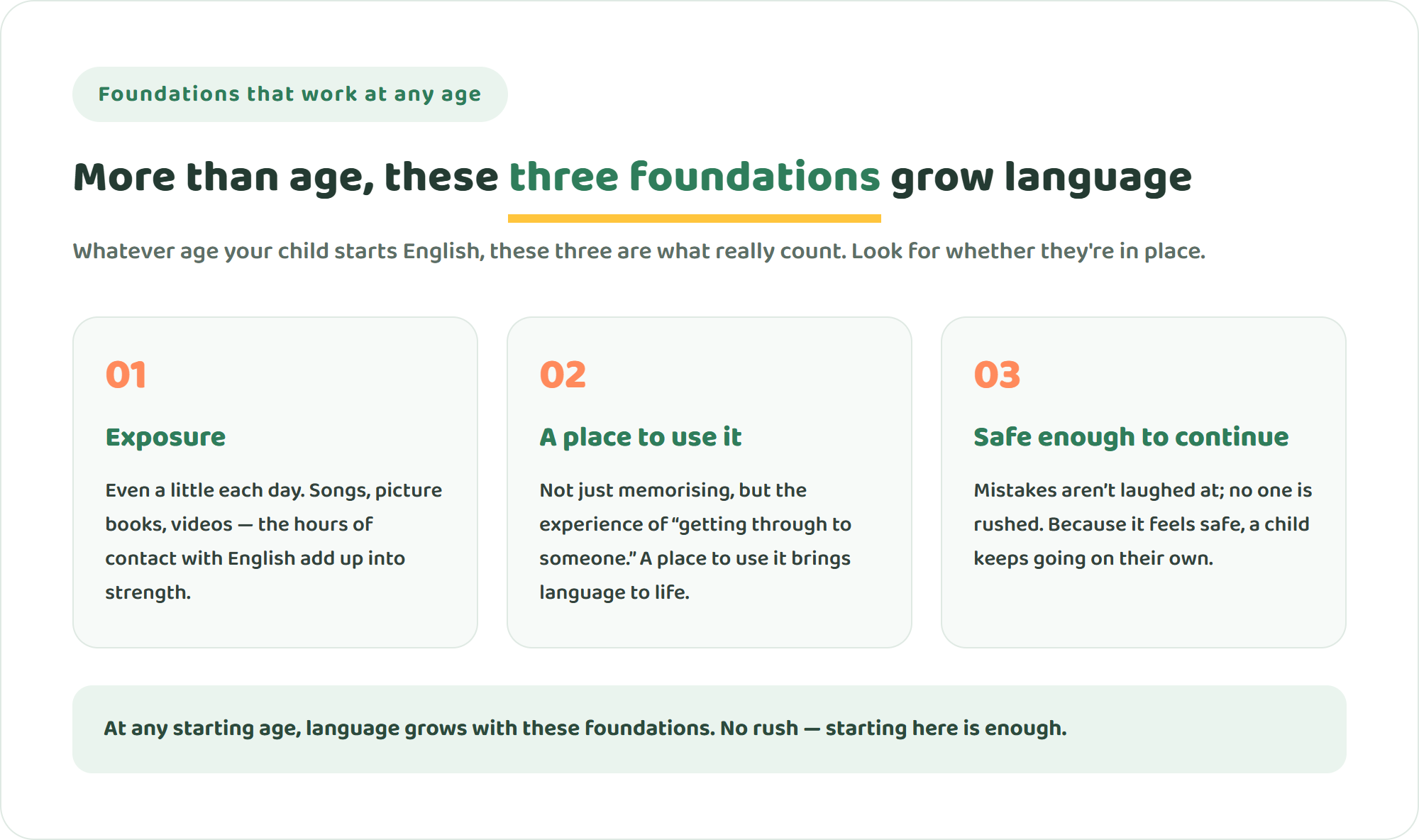
What truly makes the difference is less the starting age itself, and more three foundations: how much English a child is exposed to, whether they have a place to actually use it, and whether they feel safe enough to keep going. With these in place, language grows at any starting age. Without them, even an early start can stall — a child grows to dislike English and quietly gives up.
Thinking it through by age — the strengths and the cautions
Of course, “any age is fine” can leave you more unsure, not less. So let’s look honestly at each age band — both what it offers and what to watch for. The real question is whether it fits your child right now.
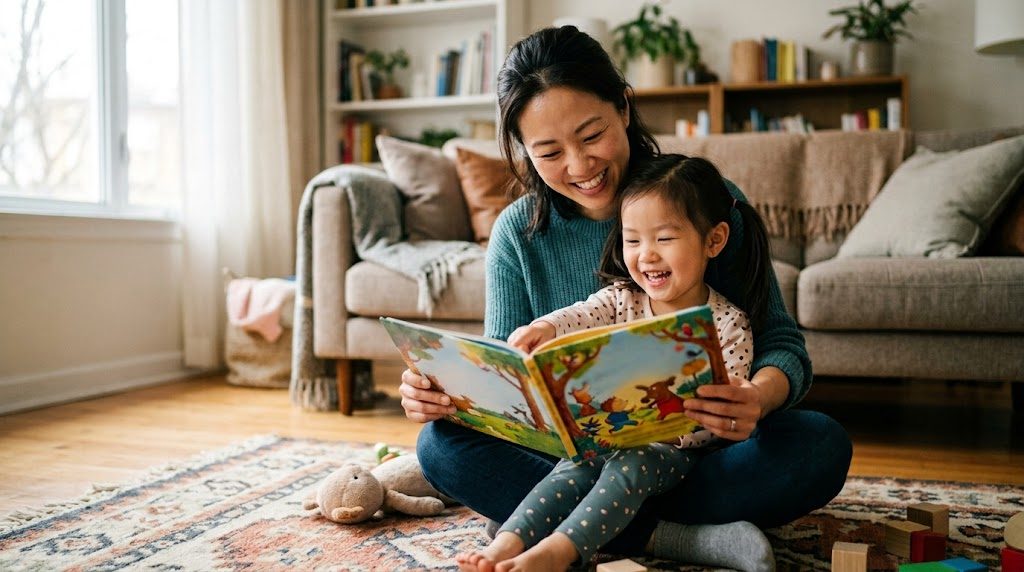
- Early childhood (up to around 6) — the ear is soft, and children take in the sounds of English easily. Growing familiar with pronunciation and rhythm is a genuine strength here. But children this age still absorb through play. Rather than sitting them at a desk, songs, picture books and pretend play matter most. Force too much, and a child can come to dislike English itself.
- Lower primary (around 6–9) — the first language has taken some shape, and curiosity about letters begins to stir. Children this age imitate freely and are less embarrassed by mistakes, which makes it a golden window for speaking and listening. If they can taste the success of “I got through to someone in English” now, everything afterward gets easier.
- Upper primary and beyond (10+) — often written off as “too late,” which it simply isn’t. At this age, reasoning and logic are developing, so children can learn grammar and structure in a way that makes sense to them. When a child has a sense of “what I want to do with English,” they can grow remarkably fast. Plenty of children start right here, with purpose.
Every age band has its strengths and its cautions. You can start to see why “early = advantage, late = disadvantage” is far too simple a way to line them up.
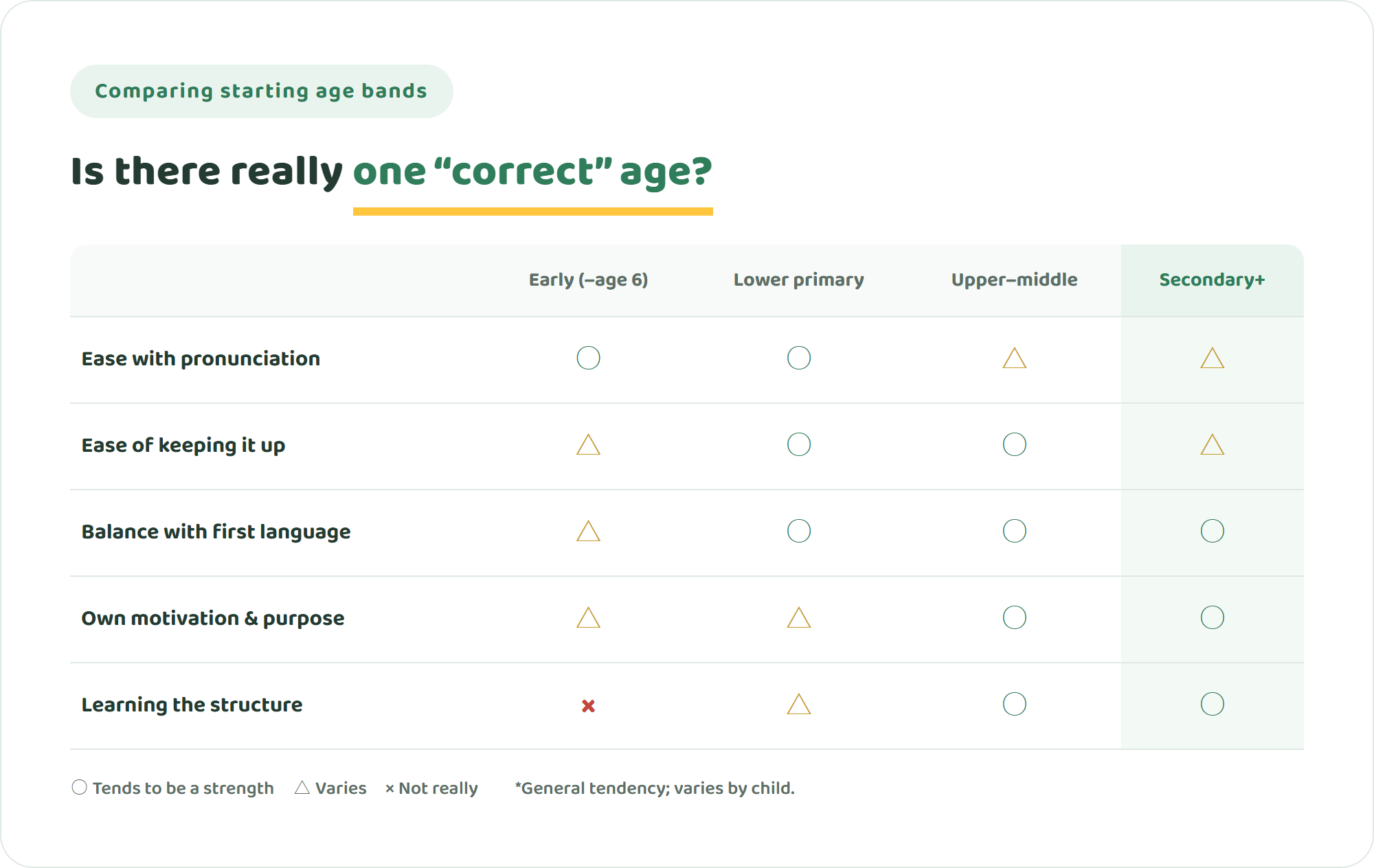
What the table shows is that every age band has a point where it earns an “o,” and every stage has something to watch for. That’s precisely why choosing an approach that fits your child matters far more than rushing because of a number.
The “earlier is better” myth — and the first language
“Start early or they’ll never sound native.” Have you felt that pressure? Let’s slow down here. It’s true that an early start tends to help a child grow comfortable with pronunciation — but that does not mean “too late means hopeless.” Countless people learn English as adults and go on to thrive across the world.
And the worry so many parents carry — “Won’t their first language suffer?” Please set that fear down. A first language and English are not two claimants fighting over one small pie. In fact, a solid first-language foundation is thought to deepen a child’s grasp of a second language. What matters is not sacrificing one for the other, but nurturing both languages, carefully, at the child’s own pace. There is no need to cram in English at the expense of everything else.
Why it’s fine even if you don’t speak English yourself
“I’m not good at English myself, so I can’t teach my child.” We hear this from parents all the time. Please be reassured: you do not need to speak English to help your child’s English grow.
What a child needs isn’t a parent who teaches perfectly, but a place to use English and a grown-up who watches over them nearby. In fact, a parent who wonders alongside them — “How do you say this, I wonder?” — and shares the not-knowing is a wonderful model of learning. You don’t have to be the teacher. Just be someone who faces the same direction and finds the world interesting together.
And you don’t have to carry it all at home. With a mentor who supports in your home language and a place to connect with peers around the world, a child can step into English beautifully — even if you can’t speak a word of it.
See how learning works at NGA →
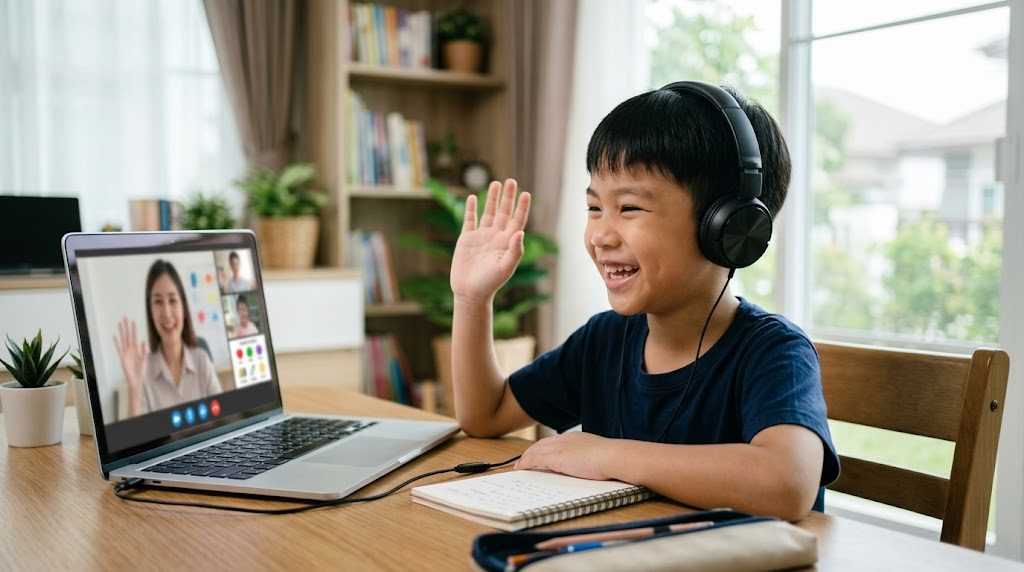
How learning works at NGA — English as a language for connecting, not a subject
NIJIN GLOBAL ACADEMY (NGA) is an online international school beyond the exam race, opening in September 2027. Instead of ranking children by test scores, we care about each child learning to love themselves and the world.
At NGA, English isn’t a “subject” to memorise, but a language for talking with peers around the world. Whatever age a child starts, what we hold onto is the same three foundations — exposure, a place to use it, and feeling safe enough to keep going. We build them like this:
- A bilingual mentor for every child — even a child new to English is supported in their home language. The safety of being able to say “I don’t get it” makes the first step lighter.
- The whole world as the classroom — in dialogue with diverse peers across Asia and Oceania, the urge to “say this” and “hear that” arises naturally. That feeling is the best teacher of all.
- An atmosphere where mistakes are fine — stumbling pronunciation is never laughed at. Because it feels safe, children speak up without fear.
“Could my child really do this?” — that worry is natural. But NIJIN Academy, the alternative school we run in Japan, already has over 800 children learning with us. Now we’re bringing that education to the world, together with English. Tuition is around one-fifth of an on-campus international school — and being able to keep going, without strain, is itself a foundation for growing a language.
An honest word — it isn’t for everyone, every time
To be clear: there’s no magic that says “start early and your child will surely be good at English.” Any approach only comes alive when it fits the child and the rhythm of the family. Forcing a start before a child’s interest has turned toward English can push them further away.
On the other hand, if your child “lights up at unknown corners of the world,” “loves talking with people,” or “wants to work at their own pace in a safe space,” then a dialogue-centred online way of learning tends to fit very well. What matters is less about finding the “right” age and more about how you set up a doorway where your child can feel English is fun.
What you can start at home, today
You don’t need special materials or an expensive monthly fee to begin. At any age, there’s a small step you can take today.
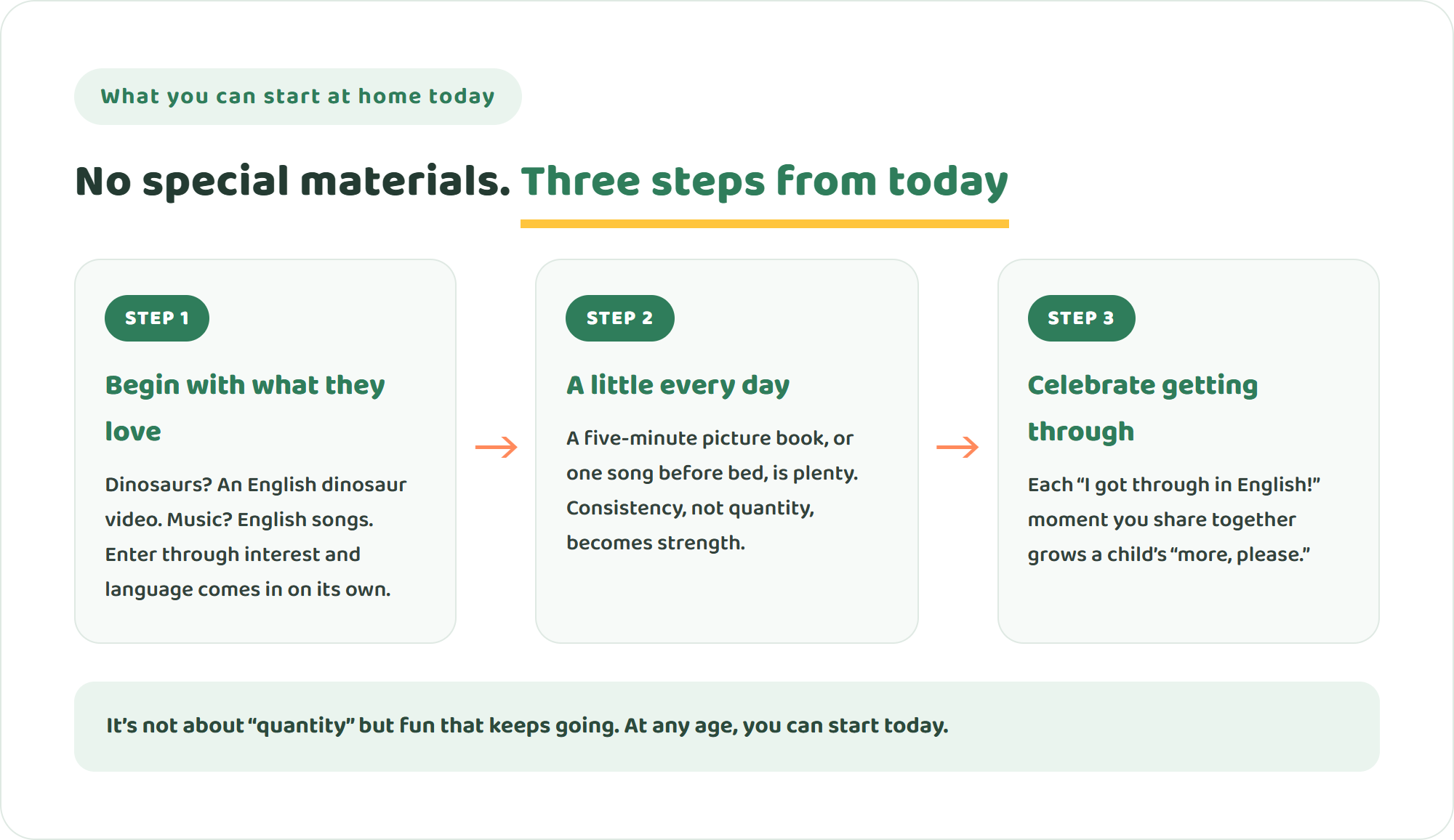
First, begin with what your child loves. Dinosaurs? An English dinosaur video. Music? English songs. Enter through an interest, and the language comes in on its own. Next, touch English a little every day — even five minutes. A short picture book, or one English song before bed, is plenty. Consistency, not quantity, becomes strength. And finally, celebrate the “I got through in English!” moments together. Each small success you share grows a child’s “more, please.” There’s no rush — starting from these three is exactly enough.
Frequently asked questions
What is the best age to start learning English for kids?
There’s no single “best” age. Early childhood helps with sounds; from primary school onward, children can learn with purpose — every stage has its strengths. More important than age are the foundations: how much English a child is exposed to, whether they have a place to use it, and whether they feel safe enough to keep going. If you’re starting now, now is the best time for your child.
My child is already in upper primary — is it too late?
It isn’t too late. From upper primary onward, reasoning and logic are developing, so children can learn grammar and structure in a way that makes sense to them. When they hold a sense of “what I want to do with English,” it can be a stage of remarkable growth. Please start with confidence.
Will starting English cause my child’s first language to suffer?
There’s no need to worry. A first language and English don’t compete; in fact, a solid first-language foundation is thought to deepen a child’s grasp of a second language. What matters is nurturing both languages at the child’s own pace, without sacrificing either.
Less “what age,” more “with what feeling.”
What is the best age to start learning English for your child? There is no correct number. Early or late, it’s alright. What truly matters is that your child meets English as a joyful language for connecting with the world. That doorway can open at any age — even today.
NIJIN GLOBAL ACADEMY opens in September 2027. We’ll share how children learn English as a language for connecting with the world, along with first-cohort enrolment news, straight to your inbox. A global education, within reach for your child.
Honest Answers to Your Worries — related reading
- Will My Child Lose Their Mother Tongue?
- The Honest Pros and Cons of International School
- Disadvantages of Bilingualism in Childhood: Myths vs Research
- Who Regrets International School — and Who Doesn’t
- International School Special Needs: What to Look For
- International School vs Local School: How to Decide
- Does International School Hurt Your Child’s Home Language?
- When Your Child Is Struggling at International School
- Do International Schools Make Children Fluent in English?
- Is International School Worth It? What Happens to Graduates
- Should I Send My Child to International School?
- Transfer From a Local School to an International School
- Disadvantages of Early English Education: What Research Says
- What Happens to International School Graduates
Get opening updates by email →
More on choosing an international education
- Online International Education in Asia and Oceania: 7 Options Compared——An honest comparison
- Where Do International School Graduates Go?——University outcomes, honestly
- Affordable International Education for Your Child——How to keep costs down
- Positive School Refusal: Supporting a Child Who Learns Outside School——Practical support for families
- International School Fees in Asia by Country——An honest comparison, and the online third path
- Are There Subsidies for International Schools?——Realistic ways to lower the cost
- A Cheaper Alternative to a Singapore International School——Affordable online options
- Affordable International Schools in Bangkok——Fees, and an online alternative
- 10 Ways to Help Your Child Learn English at Home——What parents can do
- Online High School for Expat and Globally Mobile Families——Learning that moves with you