If you have been searching for international schools in Saitama Prefecture and keep landing on English-language preschools, you are not searching badly — you are seeing the market accurately. Saitama is home to more than 7.3 million people and around twenty English-based schools, but the large majority serve children under six. As of 2026, only a handful accept students at elementary age and beyond, and just one realistically carries a child all the way to a high school diploma. This guide separates the two layers honestly: the schools that continue past kindergarten, and the preschools mapped by area. Then it covers the three practical routes families here actually take when nothing local fits — commuting into Tokyo, choosing a Japanese school with an International Baccalaureate or global-track programme, or learning online without commuting at all.
Quick Answer: Your Options in Saitama Prefecture
If you only read one section, read this. Below are the schools covered in this guide, plus the online option — so you can see every route side by side before the details.
- Columbia International School (Tokorozawa) — Ages: Kindergarten (around 4) through grade 12 / Fees: Kindergarten entrance fee ¥210,000 plus annual tuition ¥1,612,500 (about ¥1.82M in…
- Commute into Tokyo
- Shalom International Christian School (Shiki) — Ages: Early years through junior and senior high / Fees: Enquire directly — limited public information
- Study in English inside the Japanese system — IB and global-track schools
- LoV Christian International School (Toda) — Ages: Kindergarten through elementary and high-school level / Fees: Third-party guides cite figures approaching ¥1 million per year, but this varies…
- Learn online, without commuting at all
- Victory International School (Kasukabe) — Ages: Preschool through elementary / Fees: Third-party guides cite around ¥600,000 per year, varying by course and days…
- NIJIN GLOBAL ACADEMY (online) — Ages 6–18 / opening September 2027, currently taking opening-update registrations / fees around one-fifth of a typical campus international school / Japanese-language support. An option when commute or fees are the wall.
International schools in Saitama Prefecture: the landscape and fee ranges
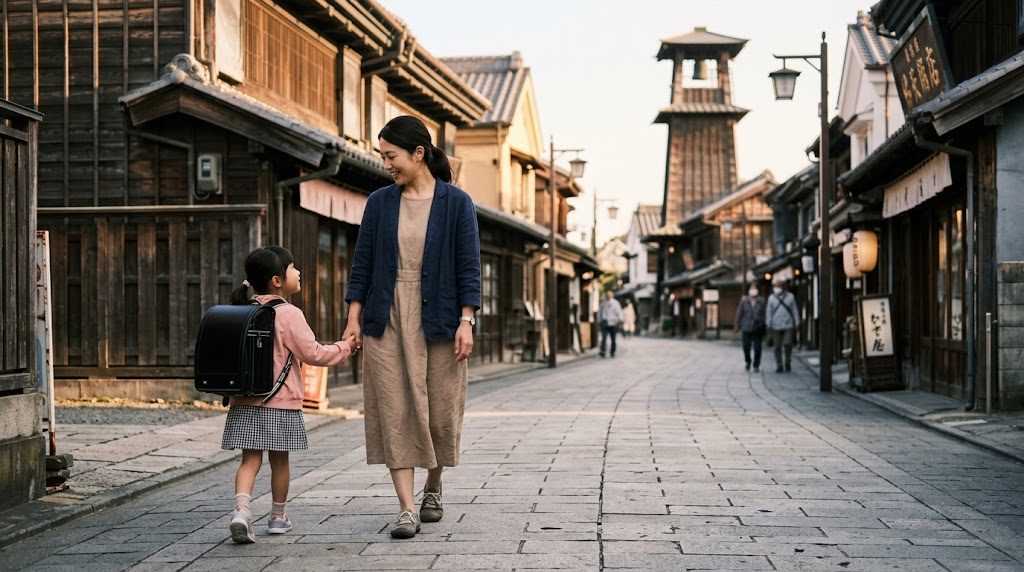
Saitama is internationalising quickly. According to the prefectural government, about 257,000 foreign residents lived here as of 1 January 2025 — roughly 3.5% of the population. Kawaguchi City alone counts around 48,000, the highest number of foreign residents of any municipality in Japan. What has not kept pace is the supply of schools where a child can keep learning in English year after year. That gap is the single most important fact about international education in Saitama.
The schools split into two clear layers. The first is the preschool layer: roughly twenty English-immersion nurseries and kindergartens for children aged about one to six, clustered along the rail lines in Saitama City, Toda, Kawagoe, Koshigaya, Kasukabe and Niiza. The second is the small group of schools that accept elementary-age children and older — about four in the whole prefecture. If you need continuity through to grade 12, Columbia International School in Tokorozawa is effectively the anchor option.
Fees differ sharply between the two layers. Preschools generally run about ¥60,000–120,000 per month, which lands somewhere around ¥800,000–1,500,000 a year once entrance fees, materials and facility charges are included. Schools that continue past elementary age sit in the ¥1.0–2.5 million per year range. Columbia International School, for example, publishes a kindergarten entrance fee of ¥210,000 plus annual tuition of ¥1,612,500 (about ¥1.82 million in the first year), with reported figures approaching ¥2.5 million per year in the secondary grades. Children aged three to five may also qualify for Japan’s early-childhood education subsidy at some facilities, which can lower the effective cost.
Note: fees reflect publicly available information as of July 2026 and are subject to revision. Always confirm current figures directly with each school.
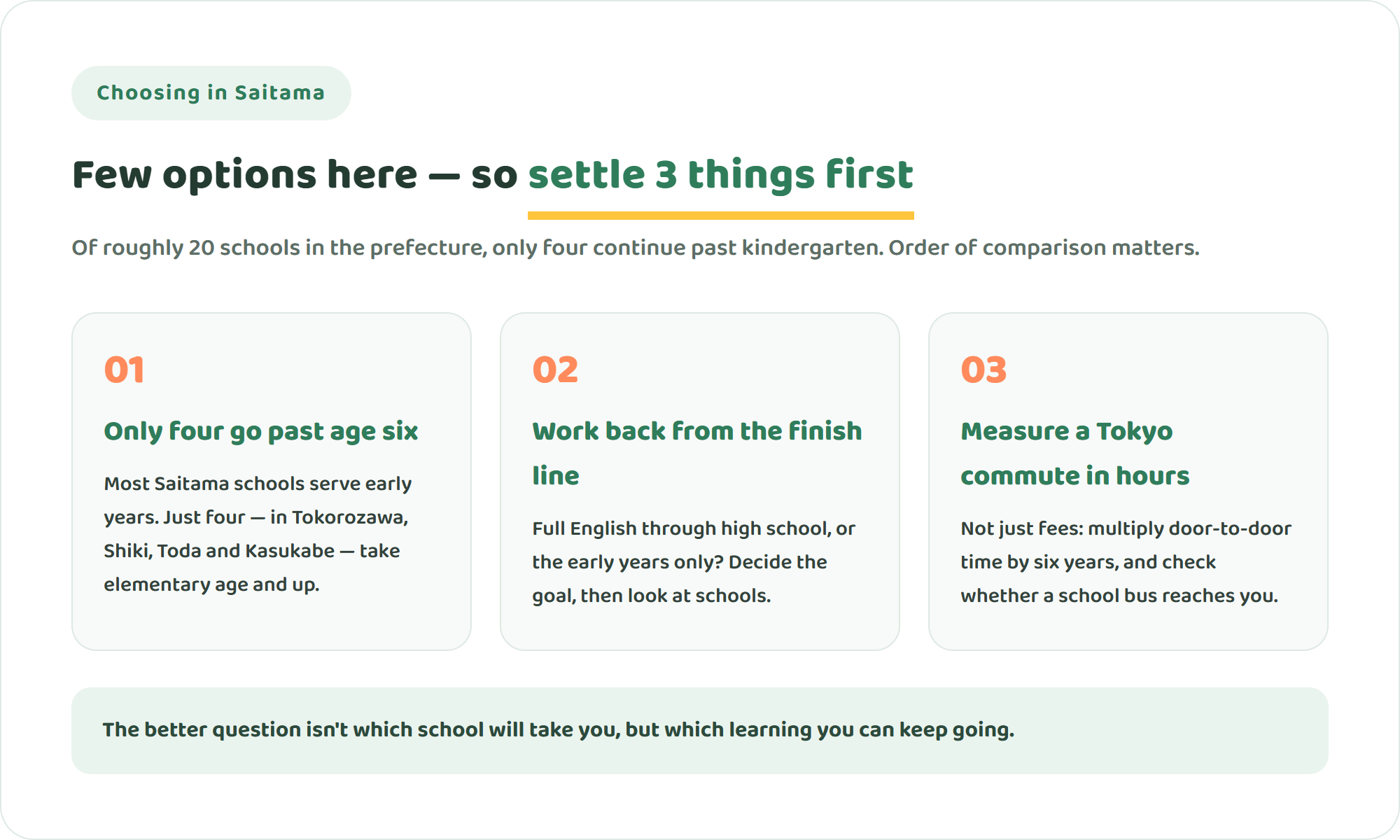
All four international schools in Saitama that continue past kindergarten
Here are the schools in Saitama Prefecture that accept students at elementary age or above, as far as public information allows. There is no padding to reach a round number. They differ enormously in curriculum, size and philosophy.
1. Columbia International School (Tokorozawa)
Founded in 1988, Columbia is Saitama’s flagship international school. Its Tokorozawa campus houses kindergarten, elementary, junior high and a senior division, taking students from around age four through grade 12. It follows the Canadian Ontario Ministry of Education curriculum, and graduates earn the Ontario Secondary School Diploma (OSSD). The school is also accredited by WASC. Enrolment is around 220 students, so classes are small, and Japanese-language study runs alongside English immersion. If your goal is to finish high school in English without leaving the prefecture, this is where the search starts.
- Curriculum: Canadian (Ontario) curriculum, WASC accredited, OSSD on graduation
- Ages: Kindergarten (around 4) through grade 12
- Fees: Kindergarten entrance fee ¥210,000 plus annual tuition ¥1,612,500 (about ¥1.82M in year one); secondary grades reported at roughly ¥2.5M per year. Optional lunch ¥109,800 per year. Sibling discounts and scholarships available (2026 information; confirm directly)
- Good fit for: Families who want a full English education through high school in Saitama, with overseas university options in view
2. Shalom International Christian School (Shiki)
A small Christian school in Shiki City, with an attached kindergarten (Shalom Yoji Gakuen) alongside elementary and secondary divisions. That combination — early years through the teenage years on one site — is rare in Saitama. The school is intentionally small, with a strong emphasis on faith and character formation, and a family atmosphere that suits parents who want a close-knit community rather than a large campus. Published fee information is limited, so a visit and a direct enquiry are essential.
- Curriculum: Christian education delivered in English, kindergarten through secondary
- Ages: Early years through junior and senior high
- Fees: Enquire directly — limited public information
- Good fit for: Families wanting a small, values-centred community with continuity beyond the early years
3. LoV Christian International School (Toda)
Based in Toda City, LoV uses the ABEKA curriculum widely used in Christian schools in the United States, running English-medium programmes from kindergarten through elementary and high-school-level study. The school highlights childcare arrangements that work for dual-income households and a comparatively accessible fee structure. For families in the southern belt of the prefecture — Toda, Kawaguchi, Warabi, Wako — it is one of the few realistic ways to keep an English environment going after preschool.
- Curriculum: ABEKA (US Christian education programme)
- Ages: Kindergarten through elementary and high-school level
- Fees: Third-party guides cite figures approaching ¥1 million per year, but this varies widely by programme and attendance pattern — confirm directly (2026)
- Good fit for: South Saitama families seeking a more affordable English pathway past kindergarten
4. Victory International School (Kasukabe)
Located in Kasukabe, Victory runs a preschool programme plus an elementary course built around a Cambridge-style English curriculum in small classes. Notably, it accommodates children who remain formally enrolled at their local public elementary school, coordinating with that school on attendance and reporting. In the eastern part of the prefecture — Kasukabe, Koshigaya, Sugito, Kuki — options for elementary-age children are thin, which makes this one worth knowing about.
- Curriculum: English-medium early years plus a Cambridge-style elementary course
- Ages: Preschool through elementary
- Fees: Third-party guides cite around ¥600,000 per year, varying by course and days attended — confirm directly (2026)
- Good fit for: East Saitama families combining public school enrolment with an English learning environment
International preschools in Saitama Prefecture, by area
For children under six the picture is far more generous. Here are the main English-immersion preschools by area — with the caveat that these serve early years only and do not continue into elementary school.
Saitama City (Omiya, Urawa, Musashi-Urawa, Urawa-Misono)
The densest cluster in the prefecture. ABC International Preschool and Omiya English Kindergarten in Omiya, Honolulu International School in Kita-Urawa, Green Bear English in Musashi-Urawa, Kids Duo in Saitama-Shintoshin, and Blue Dolphins in both Omiya and Urawa. ASC International School opened in the Urawa-Misono area in 2026. Many of these also run after-school programmes, so elementary-age children can keep using English in the afternoons.
South Saitama (Kawaguchi, Toda, Shiki, Niiza, Wako, Asaka)
The most internationally diverse belt of the prefecture, and the fastest to reach central Tokyo. Options include Pure English Kindergarten and American Kids in Toda, and International Preschool Caterpillar Kids in Niiza. Because LoV (Toda) and Shalom (Shiki) sit nearby, this is also the easiest area in which to sketch a preschool-to-elementary path without leaving Saitama.
West Saitama (Tokorozawa, Kawagoe, Sayama, Fujimino)
Anchored by Columbia’s kindergarten division in Tokorozawa, with Very English and Cocos English preschool in Kawagoe, Beck English Preschool in Fujimino and EIGOT in Sayama. These are spread along the Seibu and Tobu Tojo lines, so travel time tends to drive the decision more than curriculum does.
East Saitama (Kasukabe, Koshigaya, Soka, Sugito)
Mighty Acorns and Victory International School in Kasukabe, Bilingual Kids House in Koshigaya, and Beans International (Koshigaya / Yoshikawa-Minami). This area has seen campus consolidations in recent years, so it is worth confirming that a school is still operating — and still serving your child’s age group — before you plan around it.
Three options when nothing in the prefecture fits
The wall most Saitama families hit is the same one: preschool is manageable, but the path stops at age six. Here are the three routes that actually work.
1. Commute into Tokyo
Saitama’s real advantage is access. The Saikyo Line, Shonan-Shinjuku Line, Tobu Tojo Line (through-running to the Fukutoshin Line) and the Seibu lines put many western and central Tokyo schools within roughly an hour of the southern prefecture. The honest counterweight is that a daily long commute costs a young child energy and a parent time. Before you shortlist, multiply the door-to-door time by six years and see how it feels. For the full picture of what is available across the capital, see our guide to international schools in Tokyo.
2. Study in English inside the Japanese system — IB and global-track schools
You do not have to attend an international school to get an international education here. Omiya International Secondary School, run by the City of Saitama, opened in 2019 as a public school where all students in years one to four take the IB Middle Years Programme, and students on the Global Course in years five and six can pursue the IB Diploma Programme. Getting that at a public school is genuinely unusual in Japan. Shohei Junior and Senior High School in Sugito also runs MYP for all junior high students and offers an IB Diploma course at high school level. Seibu Gakuen Bunri in Sayama invests heavily in overseas study trips and intercultural education — though to be straightforward, its Global Advanced Class is a selective track aimed at top Japanese universities rather than an English-medium programme. For families who want to keep Japanese school enrolment, this route is often the most practical answer.
3. Learn online, without commuting at all
The third route removes the commute from the equation entirely, which for many families is exactly where the constraint sits. More on that below. You can also compare neighbouring prefectures through our guide to international schools across all 47 prefectures.
Comparing the options: what actually fits your family
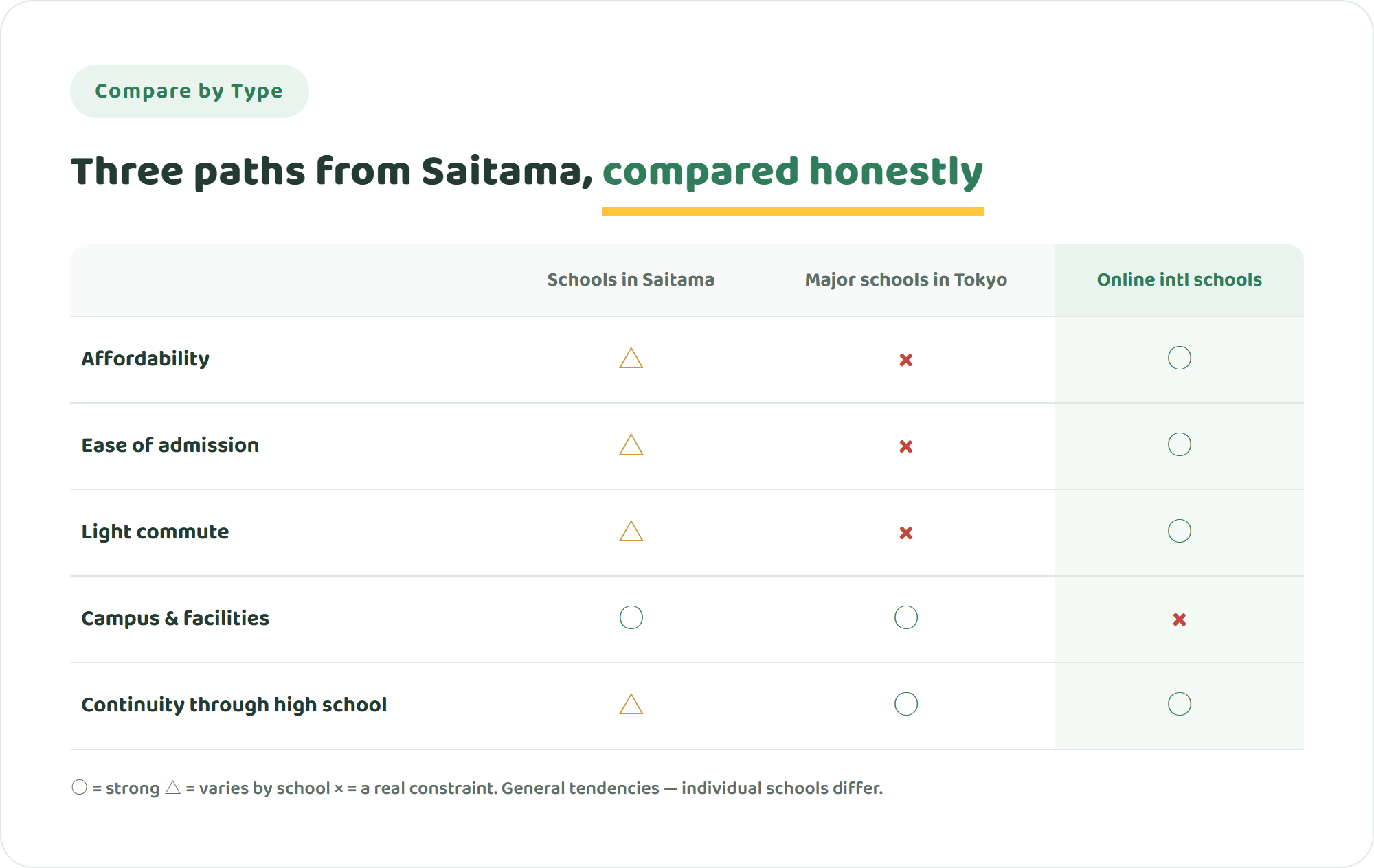
Saitama schools, Tokyo schools and online international schools are not ranked best to worst — they fit different constraints. Lay them against five criteria and the decision gets much clearer: affordability, ease of admission, commute burden, in-person campus experience, and whether the path can continue through high school.
If you want the cost picture in more detail, our breakdown of what international school actually costs covers the fees beyond tuition that catch families out.
See how learning works online →
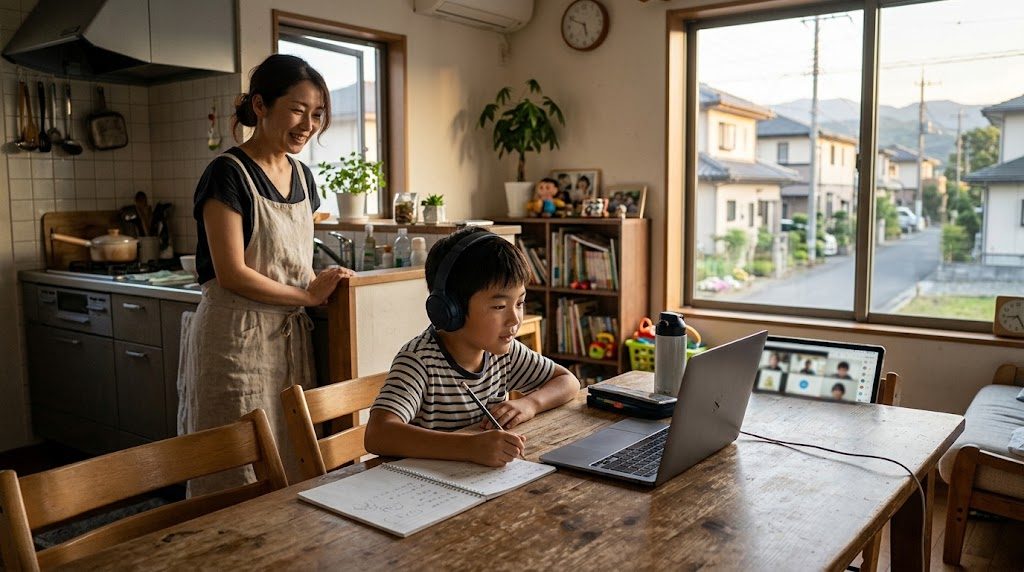
When nothing is within reach — the online option
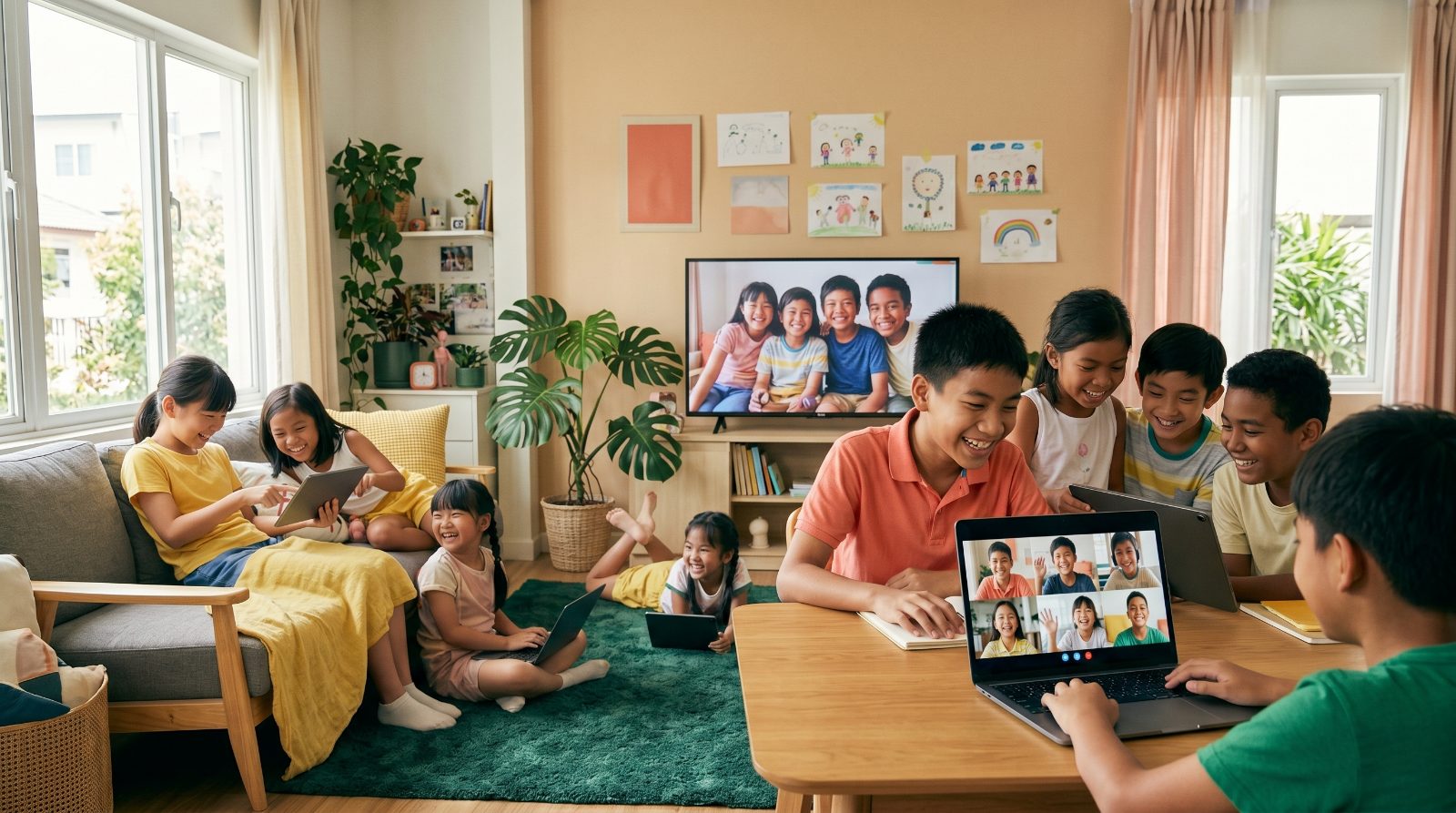
Some readers will finish the list above thinking: there is no school here that continues, and a daily commute into Tokyo is not workable. That is precisely the family NIJIN GLOBAL ACADEMY (NGA) is being built for. We are an online international school opening in September 2027.
NGA is run by NIJIN Inc., the Japanese company behind NIJIN Academy, an alternative school with over 1,000 students enrolled. What we care about is moving away from ranking children by test scores. Learning happens in small, dialogue-centred groups, built around a simple aim: helping children come to like themselves and the world. We serve ages 6 to 18 across Asia and Oceania, and because location is irrelevant, a family in Tokorozawa, Kasukabe or Chichibu has exactly the same access. Japanese-language support underpins the programme so children can move into English gradually. Our goal is to make tuition roughly one-fifth of a bricks-and-mortar international school.
The honest caveats: we have not opened yet, so our track record is still ahead of us. And an online school cannot reproduce a playground, a school field, or the feeling of sitting shoulder to shoulder in the same room. Even so, for a good number of Saitama families, this is what turns “we cannot get there, so we will give up” into “we do not need to get there at all”.
Frequently asked questions
Q. Can families anywhere in Saitama reach these schools?
A. Not evenly. The four schools sit in the south (Toda, Shiki), the west (Tokorozawa) and the east (Kasukabe). From the Chichibu region or the northern cities — Kumagaya, Gyoda, Fukaya — even an in-prefecture school typically means over an hour each way. Map the actual route and travel time first, then ask whether your family can sustain that every morning for six years.
Q. Do many Saitama families commute to schools in Tokyo?
A. Yes, particularly from Kawaguchi, Toda, Wako and Asaka, where access to the capital is strongest. School bus coverage varies enormously between schools, however, so check the bus routes before you shortlist. Whether a route reaches your neighbourhood can decide the whole question.
Q. What about Japanese-language support?
A. It depends entirely on the school. Columbia, for instance, runs Japanese study alongside English immersion, while some environments are almost entirely English. Many parents worry that their child will end up strong in neither language. Whatever you choose, put “how is Japanese maintained?” on your list of questions at every school visit, and ask to see the actual weekly timetable rather than the brochure description.
Choose what you can sustain, not just what you can reach
Finding an international school in Saitama Prefecture is genuinely hard. The options are few, and depending on where you live, the answer may not lie inside the prefecture at all. But that is not the same as saying international education is out of reach for your child. There are four routes here, not one: a local school, a Tokyo commute, an IB or global-track Japanese school, or learning online.
The better question is not which school will accept your child, but which kind of learning your family can keep going for years. There is no need to rush. Start today by checking one commute route. Even that will change how the map looks.
International School Guides for Other Prefectures
- International Schools in Kanagawa Prefecture
- International Schools in Chiba Prefecture
- International Schools in Ibaraki Prefecture
- International Schools in Tochigi Prefecture
- International Schools in Gunma Prefecture
- International Schools in Hokkaido Prefecture
- International Schools in Aichi Prefecture
- International Schools in Shiga Prefecture
- International Schools in Shimane Prefecture
- International Schools in Shizuoka Prefecture
- International Schools in Tokushima Prefecture
- International Schools in Tottori Prefecture
- International Schools in Toyama Prefecture
- International Schools in Wakayama Prefecture
- Browse all 47 prefectures of Japan