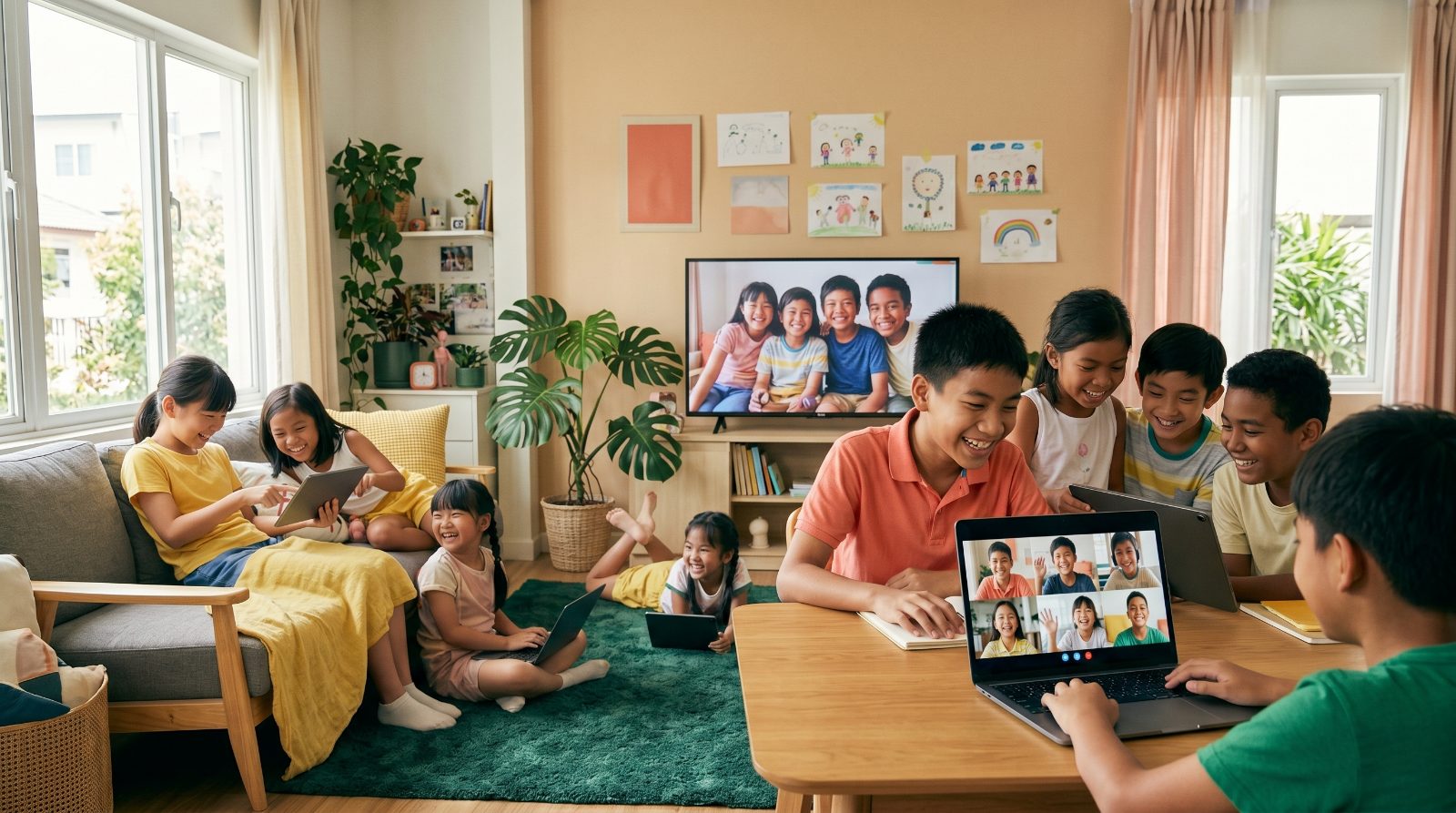

“Isn’t an online school just a child sitting at a screen all day?” It is the first thing most families ask, and the worry behind it is entirely reasonable.
But when you line up the lesson hours that schools actually publish, the picture is half right and half wrong. Time spent in front of a teacher is shorter than most people imagine. What is long is the time a child has to run on their own — and for a household, that is the real subject.
This article follows a day at an online international school from morning to evening. It also covers the two things families discover late: what time zones do to a timetable, and what is quietly expected of the parent.
Start with the published hours
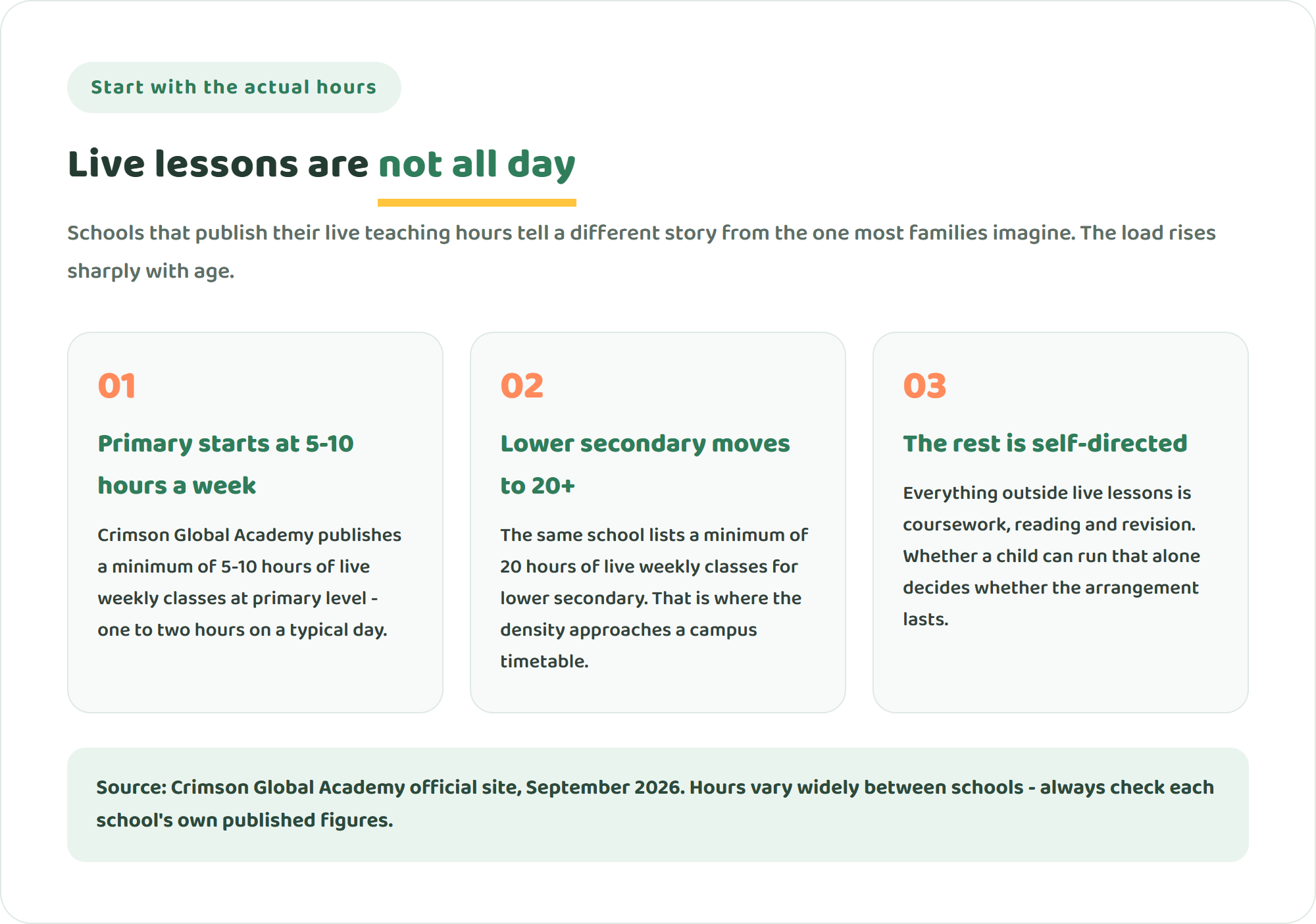
Schools vary enormously, so begin with one that publishes its figures. Crimson Global Academy states minimum live teaching hours by stage on its own site:
- Primary: a minimum of 5-10 hours of live weekly classes
- Lower Secondary: a minimum of 20 hours of live weekly classes
(Source: Crimson Global Academy, Fees and Scholarships, as published in September 2026.)
Spread across a week, primary’s 5-10 hours works out at roughly one to two hours a day — nothing like a full day at a screen. Lower secondary’s 20 hours is closer to four hours on a weekday, which begins to resemble a campus timetable.
The useful conclusion is not “online means fewer hours.” It is that the load is a different animal at different ages. Families who picture primary and enrol a thirteen-year-old are surprised.
Following the day itself
Morning: no commute, so you build the start
The journey disappears. A family that spent an hour a day travelling simply gets that hour back, and this is the most honest benefit online offers.
That hour does not turn into learning by itself, though. Schools put a short registration or check-in at the start of the day precisely because, without a signal, the day never quite begins. When you compare schools, look for whether someone sees your child’s face in the morning.
Midday: lessons, and the gaps between them
Live lessons themselves are not that different from a classroom — a teacher, live, both ways. What differs is the space around them: gaps between lessons where coursework is meant to happen. Using those gaps is where children stumble first.
“He attends every lesson but the work never gets finished” is nearly always a problem of structure, not ability. More than one family has fixed it with a paper timetable on the wall.
Evening: closing the day
A commute home ends a school day. Online has no such boundary, so days either sprawl or get cut short. Deciding a finishing time does more work than families expect.
The part that gets missed: time zones
If the school is overseas, this is the biggest practical issue, because the school runs on its own clock.
A UK-based school sits roughly 8-9 hours behind Japan, depending on British Summer Time. Nine in the morning there lands in the late afternoon or early evening in Japan. The entire school day arrives after the local one has finished.
That is not automatically a problem. It is exactly why studying alongside a local school works at all: the timetables do not collide. But if you want an overseas school to be your child’s daytime main school while living in Japan, a UK timetable will not give you that.
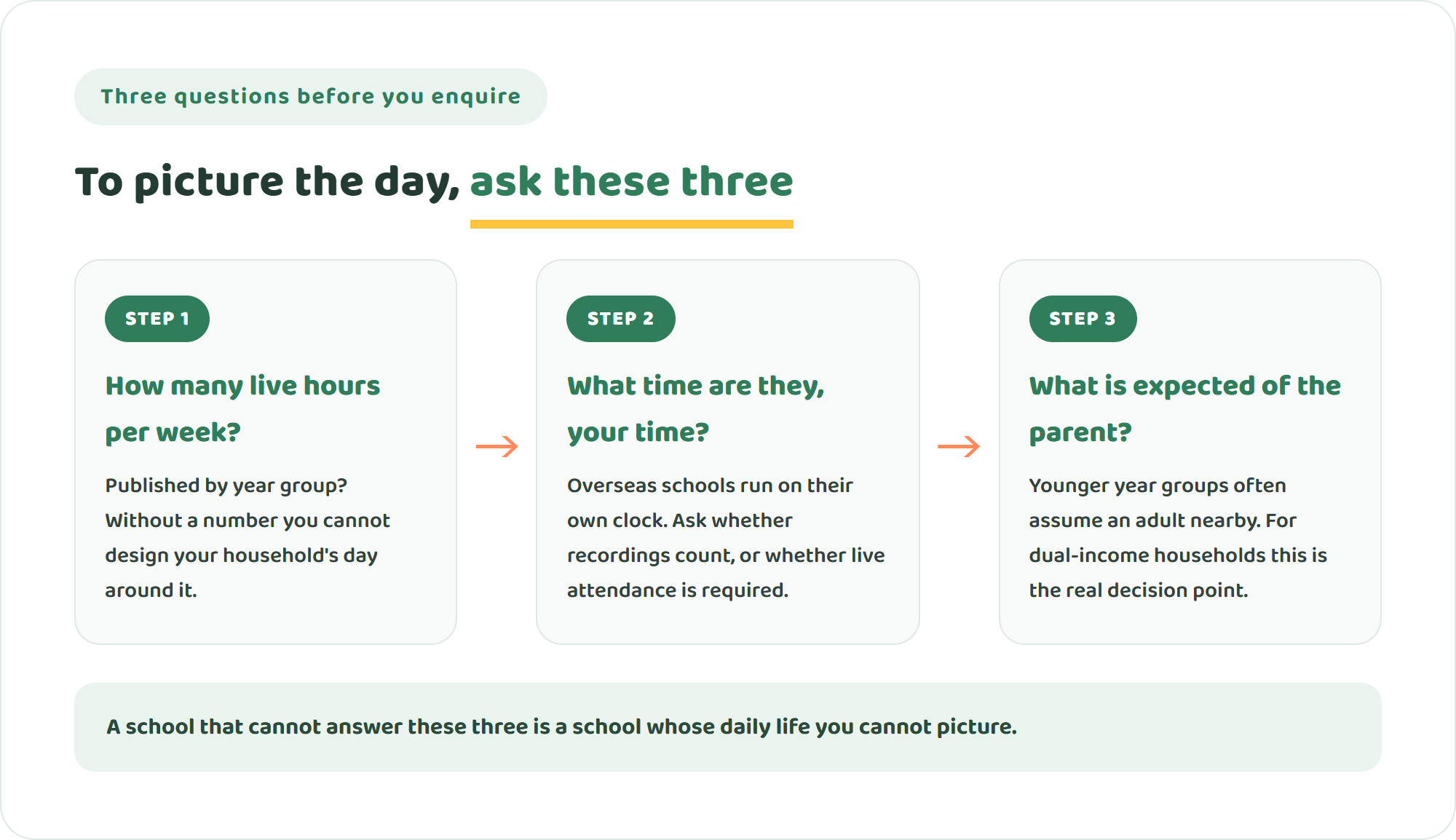
Two questions settle it:
- What are the live lesson times in your own time zone?
- If a lesson is missed, do recordings count, or is live attendance required?
Some schools accept recorded catch-up; others build everything around live attendance. Enrolling without a clear answer is how a household ends up rearranging its evenings by force.
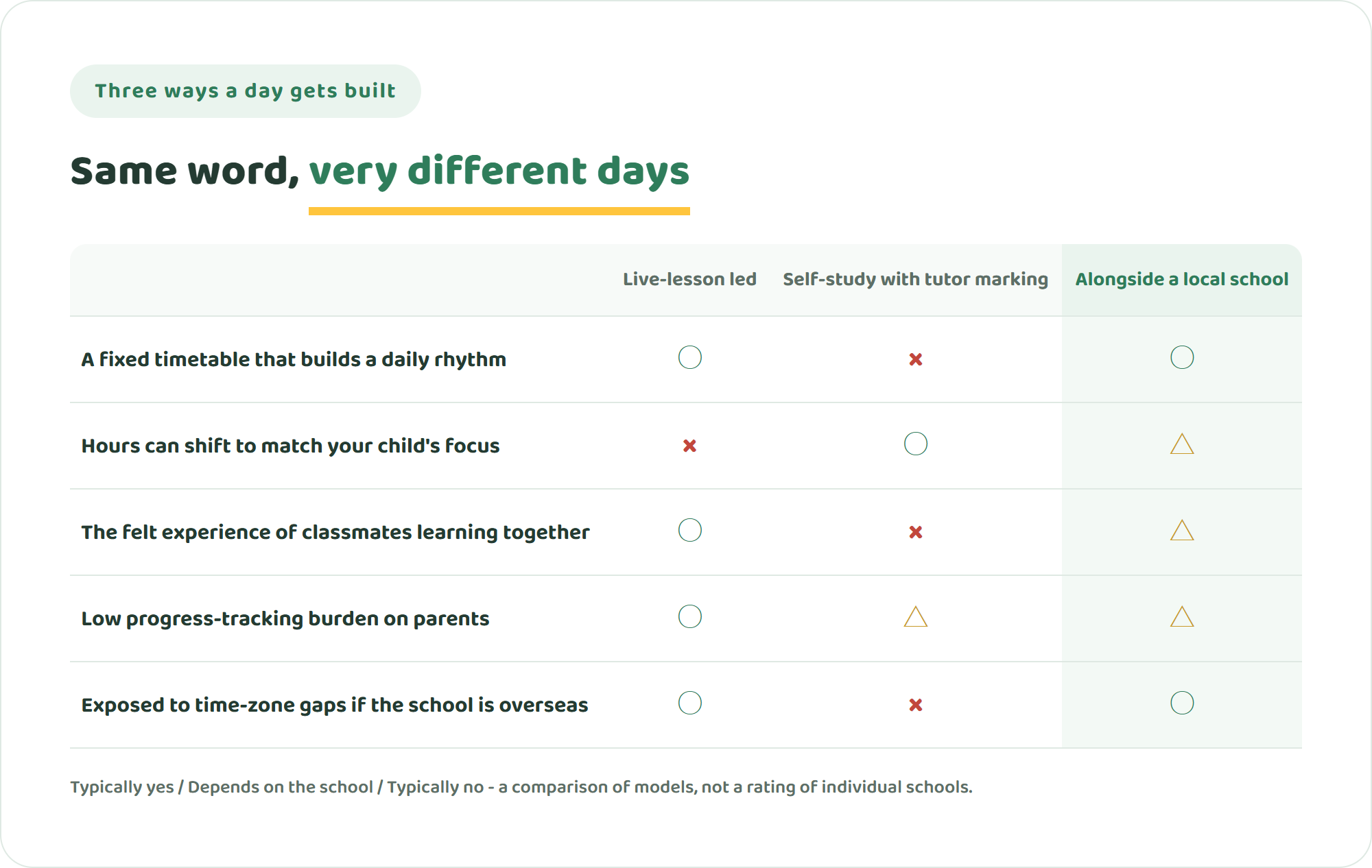
Three shapes a day can take
“Online school” covers models whose days feel nothing alike.
1. Live-lesson led
A fixed timetable with lessons at set times. Easy to build a rhythm around, and light on parental tracking, because the school carries the pacing. In exchange there is no flexibility for an off day, and an overseas school’s clock applies in full.
2. Self-study with tutor marking
Materials are issued, the child works at their own pace, work is submitted and marked. Maximum freedom — but the job of setting the pace moves to the household, and the feeling of classmates working alongside you fades. Superb for a self-starting child; it stalls for one who is not.
3. Alongside a local school
Keeping a place at the local school and studying online in the late afternoon. It preserves local enrolment while adding international study, but the total daily load definitely increases. Limiting the number of subjects is usually the difference between sustainable and exhausting.
How learning works at NIJIN GLOBAL ACADEMY
How we are designing the shape of a day — the use of time and the flow of learning.
What the parent actually does
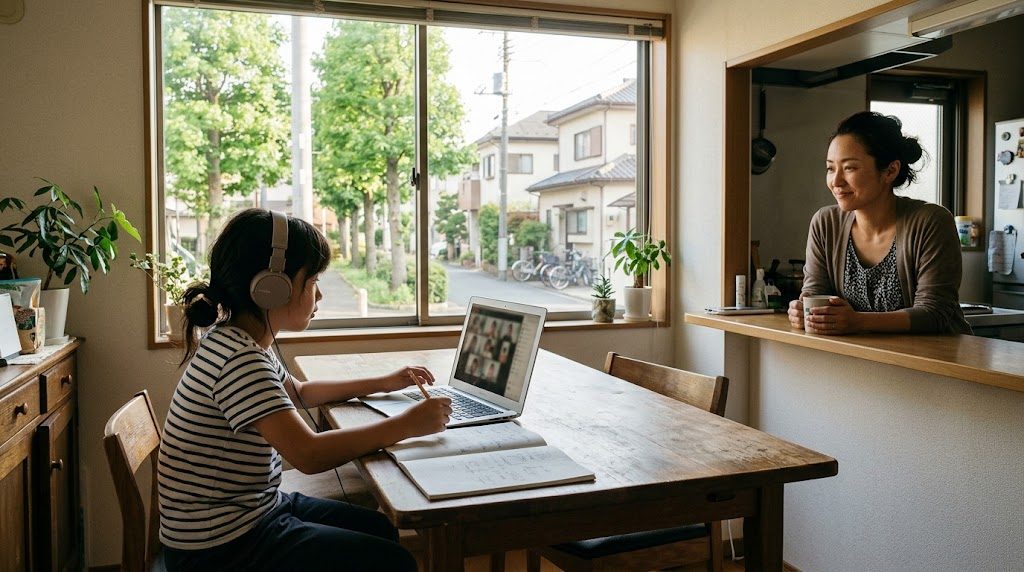
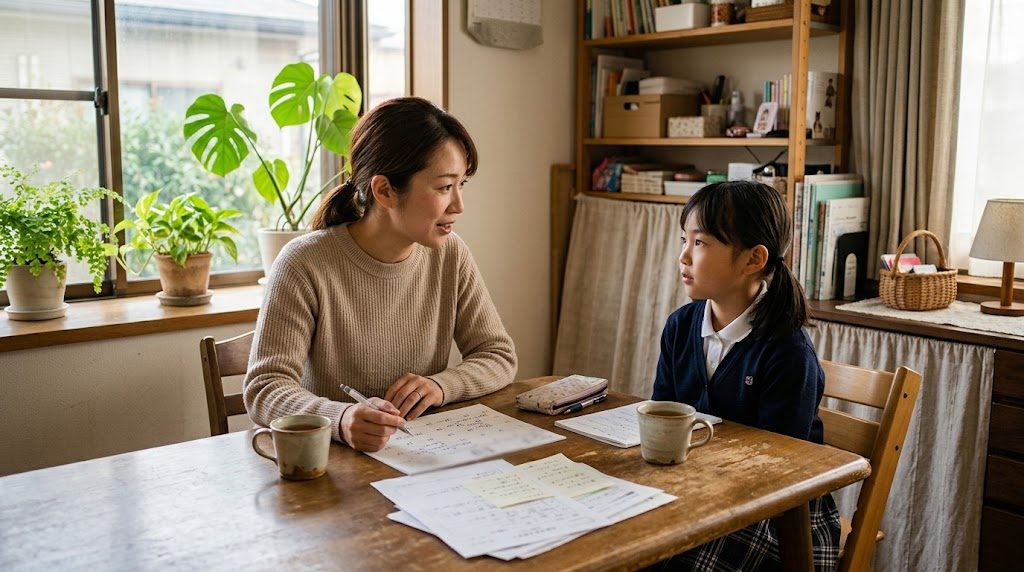
Honestly: the younger the child, the more an adult is involved.
Equipment that stops working, deadlines to keep track of, a nudge when concentration goes. Expecting full independence from a seven-year-old does not work. For dual-income households this is the genuine decision point — and counter-intuitively, if no adult is home during the day, a live-lesson-led school is often the lighter option, because the school carries the pacing instead of you.
From early secondary onwards the involvement tapers. By then the harder discipline is not stepping in.
Who it suits, and who should think twice
- Often a good fit: a child who thinks better at their own pace; one who finds large classes draining; fluctuating health; no realistic options within travelling distance; a subject they want to go far deeper into.
- Worth thinking hard about: a child who needs daily physical activity with others; one for whom simply being in a room with people is the reassurance; an age where reading written instructions is still difficult.
Very often the verdict is not “online didn’t suit her” but “that model didn’t suit her.” Children who stall in a live-led school sometimes flourish in a self-paced one, and the reverse happens just as much. Our checklist for choosing an online international school goes through this in more detail.
Common questions
Will my child make friends?
Yes — but not by accident. It depends almost entirely on whether the school builds the occasions: clubs, small-group work, in-person meet-ups. There is no equivalent of turning to the person at the next desk, so the school has to engineer what a corridor does for free.
Isn’t it lonely, alone all day?
In a live-led school there are several points in a day where your child talks to people. In a self-paced model, that contact has to be built somewhere else in the week deliberately. It is a question to settle before enrolling, not after.
Can we keep our place at the local school?
Generally yes, though it needs the local school’s understanding and careful management of the total load.
Does screen time go up?
Live teaching hours are usually shorter than classroom hours, as above. But most schools also collect coursework online, so total screen time depends on the school’s design. Whether any paper materials are used is worth asking about.
In closing
A day at an online international school is not a day spent staring at a screen. It is a day decided by how the hours outside lessons are designed. So when you talk to schools, ask not only what they teach, but how a day runs.
NIJIN GLOBAL ACADEMY plans to open in September 2027, with trial classes as a pre-opening in April-May 2027. We are designing that day around a simple idea: that a child should come to like themselves, and the world, rather than be sorted by a score.
Opening updates, by email
Curriculum, timetable and our approach to fees — registered families hear each decision first, as it is made.