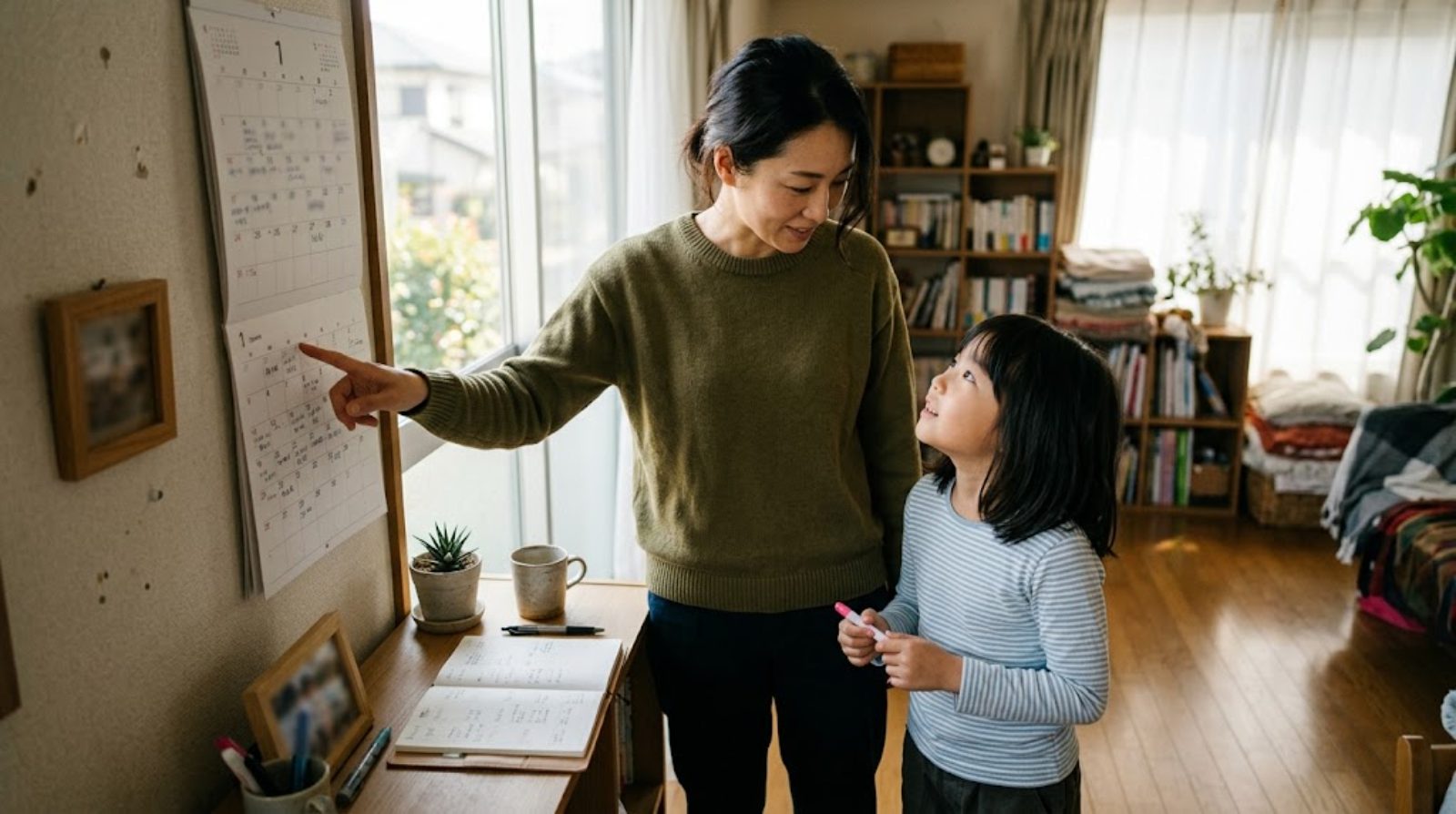
You have found a school you like, or at least a shortlist. Then a simpler question stops you: when are you actually supposed to apply? International school admissions in Japan run on a different clock from Japanese schools. The year starts in late August, not April, and the applications that matter most often close while you are still thinking about the summer.
This guide is for families moving to Japan, families returning from overseas and parents already here who are weighing an international school for the first time. We lined up the application windows, deadlines, decision dates, age cut-offs and mid-year entry rules at 10 international schools in Tokyo and Yokohama, using only each school’s official website and the official documents it links to. Everything was checked in November 2026 for the 2027-28 school year. Schools update these pages often, so please confirm the latest dates on each school’s own site before you plan around them.
The short answer
- The school year starts in late August at most international schools in Japan (mid-August at K. International School Tokyo) and ends in June.
- Applications open around September to November of the previous year. For an August 2027 start, the schools in this guide that publish an opening date opened between September 1 and mid-November 2026.
- Deadlines and priority dates fall mostly between October and February, and decisions mostly arrive between late January and March, with some continuing into summer.
- Many schools take students mid-year, but usually only when a place is free, and some limit it to families arriving from abroad.
- Age cut-offs are not Japan’s April 2 rule. These schools place children by age on July 31, August 31 or September 1, so your child may be one grade ahead of their Japanese classmates.
When does the school year start at international schools in Japan?
Japanese elementary schools run from April 1 to March 31. International schools in Japan mostly follow a northern-hemisphere calendar instead: classes begin in late August and the year ends in June. Here is what the schools themselves publish.
- The American School in Japan (ASIJ): an American-style two-semester year that begins in late August and closes in mid-June. In 2026-27, school starts on August 25.
- The British School in Tokyo (BST): three terms. The 2027-28 year runs from August 30, 2027 to June 30, 2028 (Term 1 to December 17, Term 2 from January 11 to March 31, Term 3 from April 18).
- Tokyo International School (TIS): two semesters. In 2026-27, classes start on August 25 (new student orientation on August 24) and the last day is June 18, 2027.
- K. International School Tokyo (KIST): two semesters, August to December and January to June, starting in mid-August.
- Nishimachi International School: the 2026-27 tuition schedule runs from August 26, 2026 to June 17, 2027.
- Seisen International School: begins in late August and finishes in early June.
- International School of the Sacred Heart (ISSH): starts in late August and ends in mid-June.
St. Mary’s, Aoba-Japan and Yokohama International School do not state their start dates on their admissions pages, so we have left them out of this list rather than guess. The practical point is the same everywhere: if you want your child to start with everyone else, you are aiming for late August, and the applications for that start happen in the autumn and winter before.
Age cut-offs: why your child’s grade may differ from Japanese school
This is the part that surprises many families, especially those who know the Japanese system. In Japan, a school year group is made up of children born between April 2 and April 1 of the following year. That follows from the School Education Act, which starts compulsory schooling at the first school year after a child turns six, together with the way Japanese law counts age (a child born on April 1 reaches the new age at the end of March 31).
International schools in Japan use their own cut-off dates, and they differ from school to school:
- September 1: ASIJ, St. Mary’s, Aoba-Japan, Yokohama International School and ISSH. Seisen states September 1 for its kindergarten programmes.
- August 31: BST, Nishimachi and Tokyo International School.
- July 31: K. International School Tokyo.
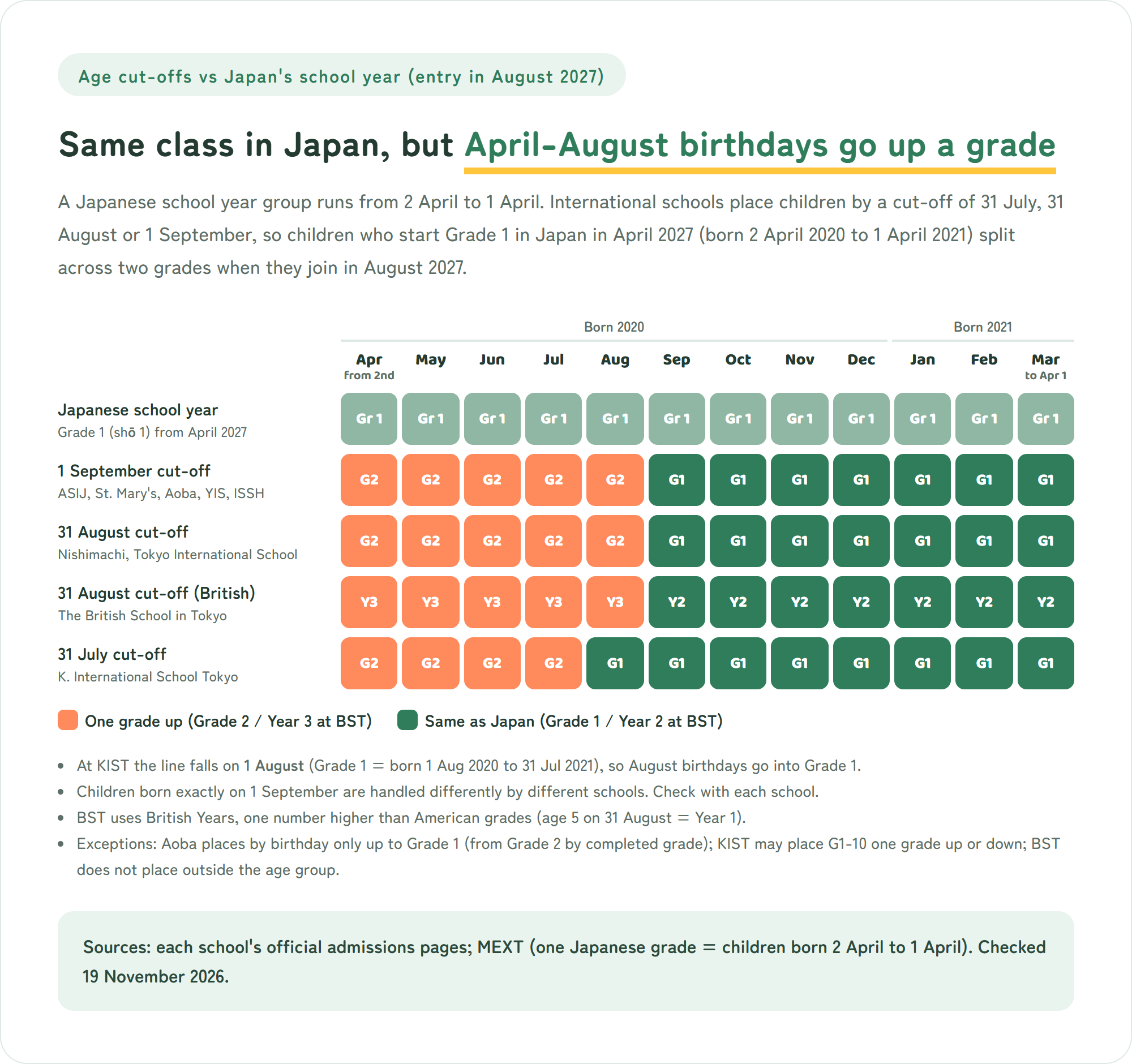
Take a child who would start Japanese grade 1 in April 2027. That year group was born between April 2, 2020 and April 1, 2021. Here is how the same children are placed for August 2027, based on the schools’ published rules:
- August 31 schools: Tokyo International School’s own table puts Grade 1 at children born September 1, 2020 to August 31, 2021. So a child born between April 2 and August 31, 2020 goes into Grade 2, while a child born from September 2020 to April 1, 2021 goes into Grade 1.
- September 1 schools: broadly the same picture. Children born from April to August 2020 land in Grade 2, and those born from September 2020 onwards land in Grade 1. How a birthday that falls exactly on the cut-off is treated depends on each school’s wording, so ask if that is your child.
- KIST (July 31): Grade 1 is children born August 1, 2020 to July 31, 2021. A child born between April 2 and July 31, 2020 goes into Grade 2.
- BST (British year groups): placement is by age on August 31, with 5-year-olds in Year 1 and 6-year-olds in Year 2. The same children land in Year 3 (born April 2 to August 31, 2020) or Year 2 (born September 1, 2020 to April 1, 2021). British year names run one number higher than American grade names.
So children born in the spring and summer often find themselves one grade above their Japanese classmates, while children born from autumn through to April 1 usually stay level with them. Some schools allow flexibility and some do not. BST states that out-of-year placement is not considered. Aoba-Japan uses birthdays only up to Grade 1 and places older children by the grade they have completed and their circumstances. KIST may place a child one grade up or down in Grades 1 to 10. YIS makes exceptions rarely, for example when a child has completed only a short part of the previous grade.
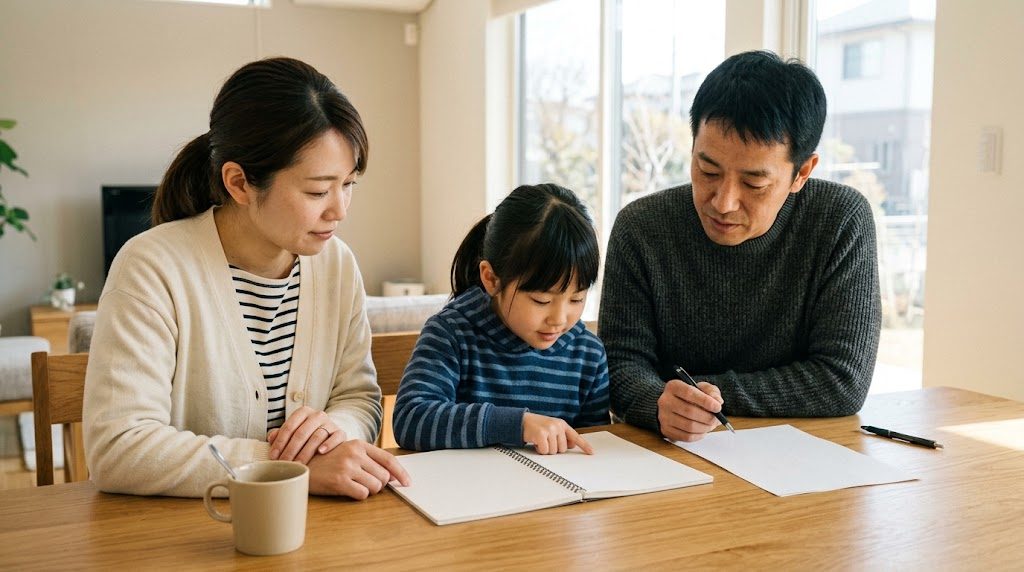
If your child is moving from a Japanese school, this grade shift is worth talking through at home early, because it changes which application round you are aiming for. Our guide to moving from a local Japanese school to an international school covers the other practical steps.
International school admissions in Japan: application windows at 10 schools in Tokyo and Yokohama
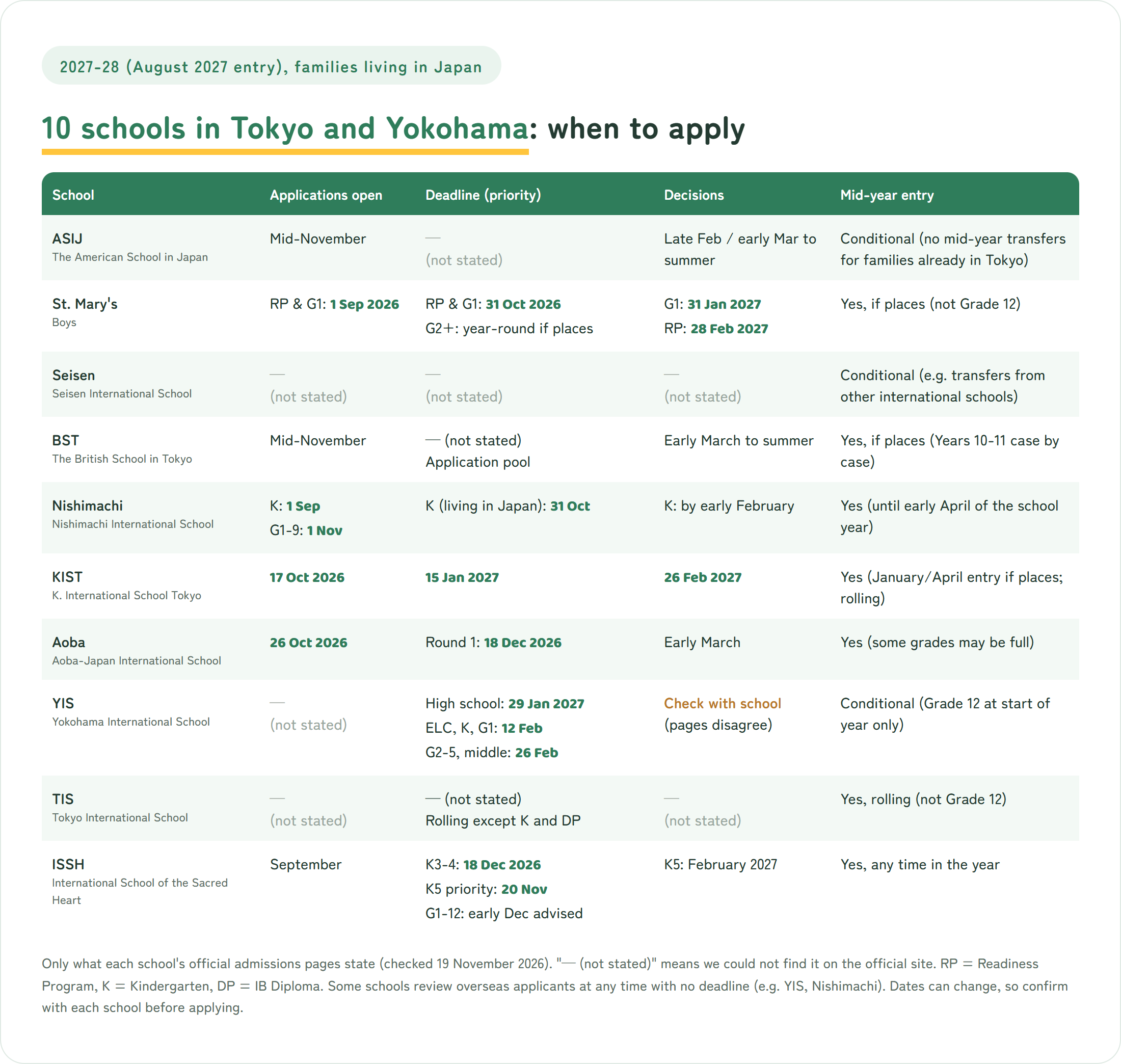
Here are the 2027-28 application timings each school publishes. “Not published” means we could not find the item on the school’s official pages; it does not mean there is no deadline. Where a school’s pages give different answers, we say so and suggest you confirm directly.
| School | Applications open | Deadline or priority date | Decisions | Mid-year entry |
|---|---|---|---|---|
| The American School in Japan | Mid-November for the following August | Not published | Usually from late February / early March, continuing into summer | Ask about space if new to Japan; no mid-year transfers for families already living in Tokyo |
| St. Mary’s International School (boys) | Readiness Program and Grade 1: September 1, 2026 | Readiness Program and Grade 1: October 31, 2026 (teacher recommendation by November 20) | Grade 1: January 31, 2027; Readiness Program: February 28, 2027 | Grade 2 and up all year, subject to space (no Grade 12) |
| Seisen International School | Not published (start with an online enquiry) | Not published | Not published | Possible from other international schools, under conditions |
| The British School in Tokyo | Mid-November; apply each year | No fixed deadline published (application pool) | Early March through summer | Primary and Years 7-9 any time if there is a place; Years 10-11 case by case |
| Nishimachi International School | Kindergarten: September 1; Grade 1 and up: November 1 | Kindergarten (living in Japan): October 31 | Kindergarten: by early February; other grades once places are confirmed | For the current year only until early April |
| K. International School Tokyo | October 17, 2026 | January 15, 2027 (main intake) | February 26, 2027 | Rolling all year if there is a place |
| Aoba-Japan International School | October 26, 2026 | December 18, 2026 for first-round interviews | Early March (main cycle) | Yes, for families moving to Tokyo during the year; some grades full |
| Yokohama International School | Not published | Living in Japan: high school January 29, 2027; ELC and K/Grade 1 February 12; Grades 2-5 and middle school February 26. Overseas: no deadline | Overseas: within weeks of a complete file. Japan residents: first offers end of February (high school) and end of March (ELC, K/Grade 1); YIS documents differ, so confirm | Conditional; some places held for newly arriving families until spring break |
| Tokyo International School | Rolling (no opening date published) | Rolling, except Kindergarten screening and the Diploma Programme | Not published | Rolling (no new Grade 12 students) |
| International School of the Sacred Heart | September each year (not more than 12 months before entry) | K3-K4: December 18, 2026; K5 priority: September 1 to November 20, 2026; Grades 1-12: complete by early December recommended | K5: February 2027 | Yes, any time in the year |
Source: each school’s official admissions pages and linked official documents, checked November 2026, for entry in August 2027 unless stated. Dates change from year to year; always confirm on the school’s website.
The American School in Japan (ASIJ)
ASIJ starts receiving applications in mid-November for the following August. It does not publish a deadline on its guidelines page, but it says decisions usually begin in late February or early March and continue through the summer. For its Early Learning Center, screenings for families living locally usually take place in December, January and February. The application fee is ¥50,000 (admissions guidelines). For costs, see our breakdown of ASIJ tuition and fees.
St. Mary’s International School
St. Mary’s is the earliest school on this list for the youngest entrants. Applications for the Readiness Program and Grade 1 in 2027-28 opened on September 1, 2026 and closed on October 31, 2026, with teacher recommendations due by November 20. Grade 1 applicants then have an on-campus screening (November 3-6, 2026), a group observation (November 14) and a family interview (November 30 to December 11), with decision letters sent on January 31, 2027. Readiness Program applicants have a group observation on January 9 and family interviews from January 18 to February 12, with decisions sent on February 28, 2027. Grade 2 and above accept applications all year, depending on seats (RP and Grade 1 admissions, admissions policy).
Seisen International School
Seisen does not publish an opening date or a deadline. The process starts with an online enquiry, followed by documents, a review by the principal, assessments in maths and English for Grades 1 to 11, and a family interview. Two years of school reports are required (application process, FAQ).
The British School in Tokyo (BST)
BST opens applications in mid-November and asks families to apply for each school year. Rather than a single deadline, complete applications enter an application pool. Document reviews run from early February to late June, interviews and assessments from late February, and decisions from early March into the summer. For full year groups, availability may not be known until May or later (applications). More on costs: British School in Tokyo fees.
Nishimachi International School
Kindergarten applications open on September 1, and families living in Japan need to apply by October 31 to be included in the January group screening. Kindergarten results are emailed by early February. Applications for Grade 1 and above open on November 1, with reviews from mid to late January; the school notes that applications are not prioritised by the date they arrive. If you are applying for Grade 9, check with the school first, because its pages do not agree on whether that grade is open (how to apply).
K. International School Tokyo (KIST)
KIST gives the clearest calendar of any school here. Applications for 2027-28 opened on October 17, 2026 and the main deadline is January 15, 2027. Tests for Grades 1 to 12 run from January 14 to February 10, results come out on February 26, and fees are due on March 5. From March 1, late applications are accepted if seats remain. KIST says its Admissions Handbook PDF takes priority over the website (admissions procedure).
Aoba-Japan International School
Applications for 2027-28 opened on October 26, 2026. Families who complete their application by December 18, 2026 are considered for the first round of interviews, with the admissions team in touch in January and main-cycle results announced in early March. Applications outside the main cycle are accepted, with decisions about a week after the interview (how to apply).
Yokohama International School (YIS)
For families living in Japan who want an August 2027 start, the deadlines are January 29, 2027 for high school, February 12 for the Early Learning Centre and Kindergarten/Grade 1, and February 26 for Grades 2 to 5 and middle school. Families overseas have no deadline and are reviewed as files are completed, though YIS recommends applying by early March (early February for high school). The admissions page lists first decisions for Japan residents at the end of February 2027 for high school and the end of March for the Early Learning Centre and Kindergarten/Grade 1, with Grades 2 to 5 and middle school decided on a rolling basis where there is space (early May where places are limited). YIS’s policy document gives different timings, so confirm them with the admissions office (admissions). See also our guide to international schools in Yokohama.
Tokyo International School (TIS)
TIS runs rolling admissions for every grade, with two exceptions: Kindergarten, which holds “playdate” screenings in January and February for the following year, and the Diploma Programme. After the group screening, Kindergarten applications are considered individually if places remain. New students are not accepted into Grade 12 (FAQ, admissions).
International School of the Sacred Heart (ISSH)
ISSH opens applications for the following year each September and does not accept them more than 12 months before the intended start date. For 2027-28, the K3-K4 deadline for the first interview round is December 18, 2026, the K5 priority window ran from September 1 to November 20, 2026, and families applying for Grades 1 to 12 are encouraged to complete their applications by early December. K5 decisions are made in February 2027 (admission process).
For a wider view of schools across the city, including those not covered here, see our guide to international schools in Tokyo.
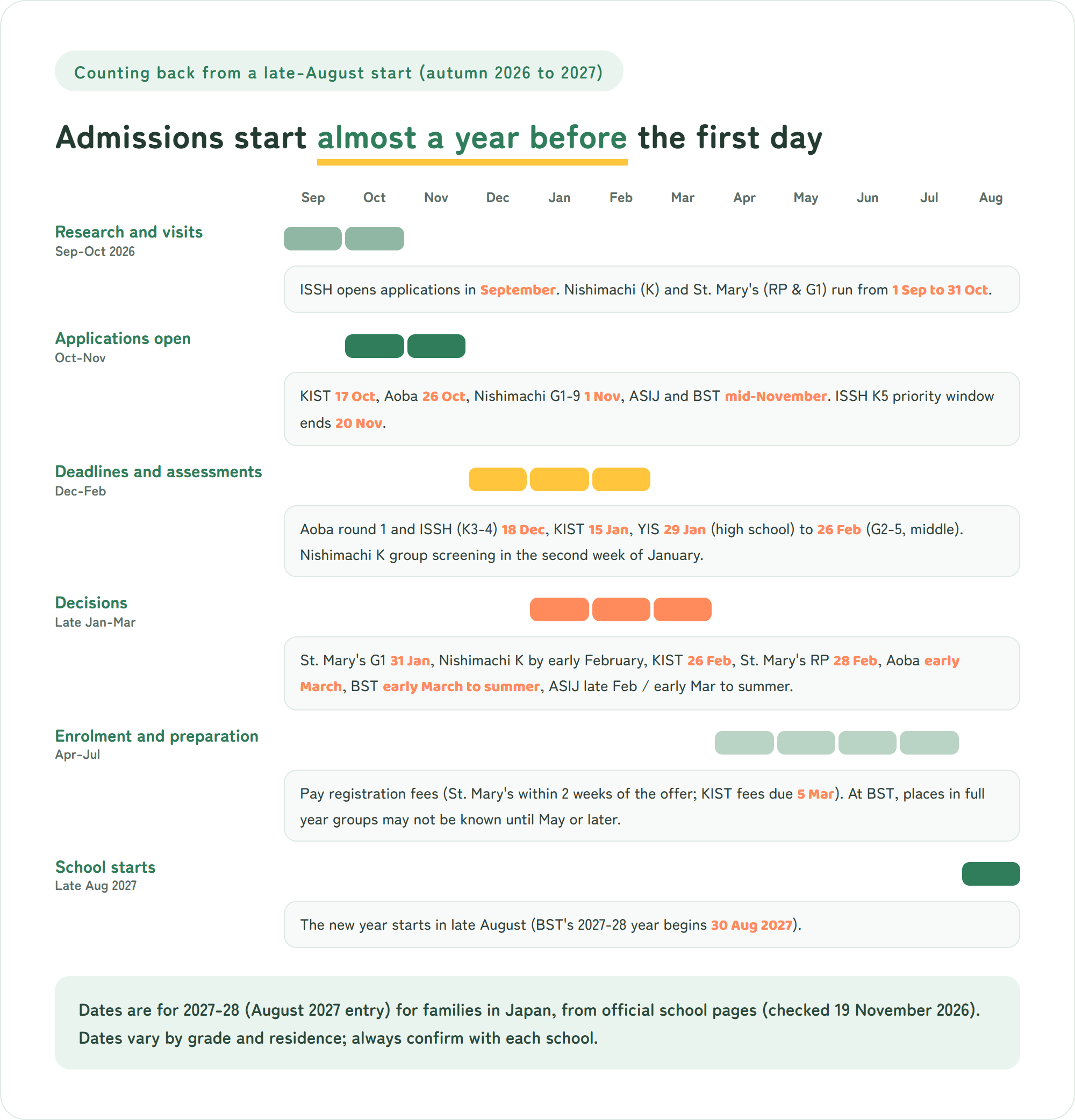
A month-by-month timeline counting back from August
Put the ten schools side by side and a common rhythm appears. If your child is starting in late August 2027, this is roughly how the year before looks. Treat it as a guide rather than a rulebook, because each school sets its own dates.
- Summer (about a year before entry): Make a shortlist, check each school’s age cut-off and work out which grade your child will enter. Start collecting school reports; Seisen asks for two years and YIS for three.
- September: The earliest windows open. St. Mary’s (Readiness Program and Grade 1), Nishimachi kindergarten and ISSH all start accepting applications in September.
- October: KIST opens on October 17 and Aoba-Japan on October 26. St. Mary’s Readiness Program and Grade 1 applications and Nishimachi kindergarten applications (families in Japan) close on October 31.
- November: ASIJ and BST open in mid-November, and Nishimachi opens Grade 1 and above on November 1. The ISSH K5 priority window closes on November 20.
- December: Aoba-Japan’s first-round date and the ISSH K3-K4 deadline are December 18. ISSH recommends that Grades 1 to 12 apply by early December. Ask teachers for recommendation letters well before the holidays.
- January: KIST’s main deadline is January 15, and YIS high school applications from families in Japan close on January 29. Screenings and interviews are under way at several schools.
- February: YIS deadlines for younger grades fall on February 12 and 26. KIST results come out on February 26, and many schools start making offers.
- March: Main-cycle decisions at Aoba-Japan arrive in early March. ASIJ and BST start releasing decisions around late February or early March, and YIS sends its first offers for the youngest grades at the end of the month. Offers come with payment deadlines: St. Mary’s asks for its registration fee within two weeks of an offer, and KIST fees are due on March 5.
- April to July: Places can still open up as families relocate. ASIJ and BST decisions continue into summer, and families who are in a wait pool may hear late.
- Late August: The new school year begins.
If you are reading this in November 2026 and planning for August 2027, you have not missed everything. Several early rounds have closed, but KIST, Aoba-Japan, YIS and others are still within their main windows, and most schools keep accepting applications after their priority dates if places remain.
Joining mid-year: rolling, space-available and limited windows
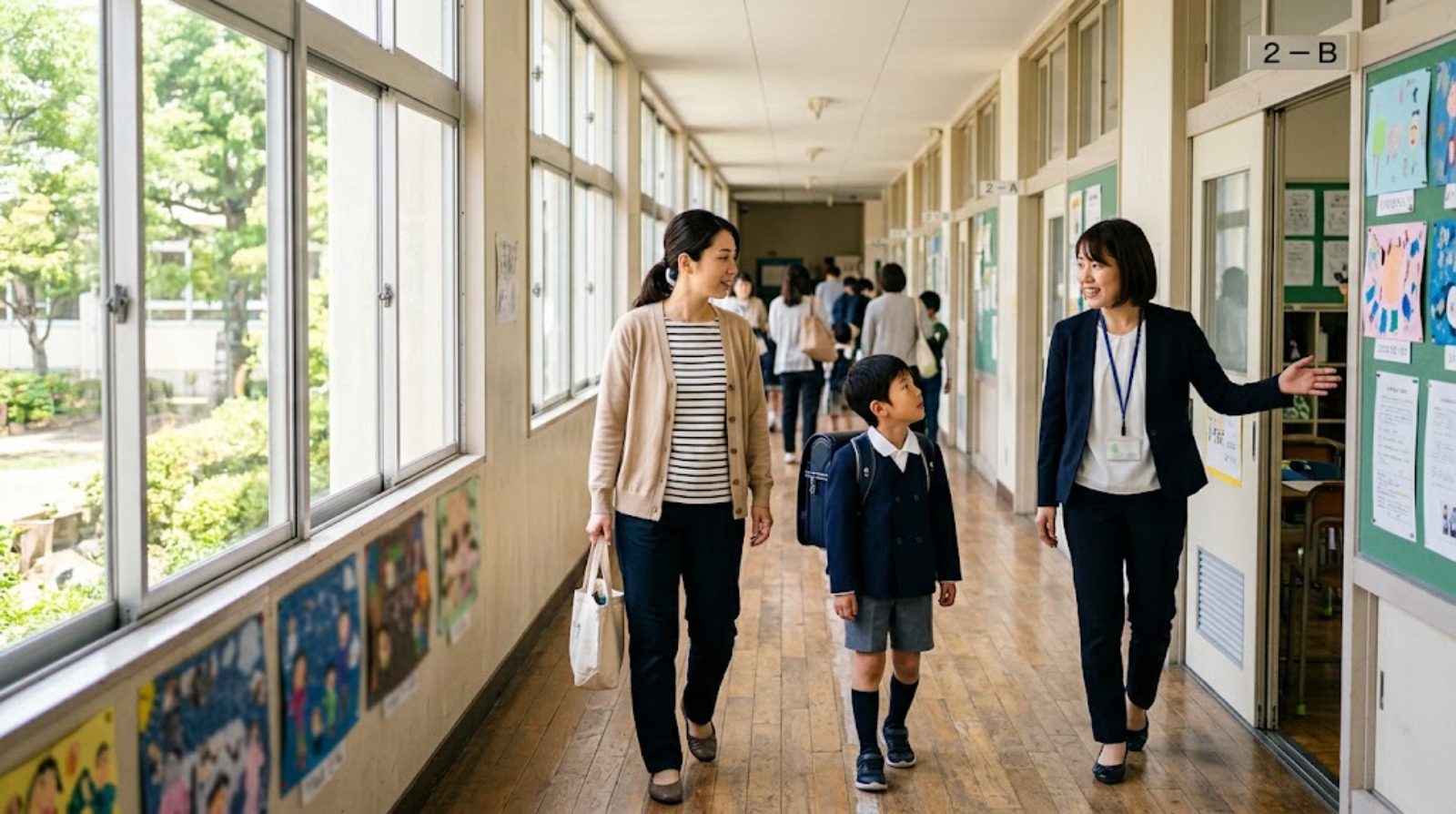
Many families do not move on a school calendar. Job transfers land in October or January, and the question becomes whether a school will take a child partway through the year. The ten schools fall into three rough groups.
Rolling admissions. Tokyo International School considers applications all year for every grade except Kindergarten and the Diploma Programme. KIST takes applications on a rolling basis outside its main intake, and says it usually takes about three to four weeks from submission to starting school; January and April starts are possible if there is a place. ISSH says students can join at any point in the year, for example when moving from overseas, with a minimum enrolment of one school year.
Space-available. St. Mary’s accepts applications for Grade 2 and above at any time depending on seats, but not for Grade 12, and not for the Readiness Program once the second semester starts in January. BST admits Primary and Years 7 to 9 at any point if there is a place; Years 10 and 11 (IGCSE) are considered individually, and starting more than four months into Year 10 is often difficult. Aoba-Japan accepts mid-year applications from families moving to Tokyo, although some grades are full and may have a waitlist.
Limited windows and conditions. Nishimachi accepts mid-year entry for the current school year only until early April, and usually decides within two weeks. YIS considers families already in Japan if there is space, the student is eligible and the principal approves; it holds some places in each grade for foreign families newly arriving in Japan until spring break in late March, offered first come, first served, and Grade 12 entry is only at the start of the year. ASIJ asks families who are new to Japan to check for space before applying, and states plainly: “We do not allow mid-year transfers for families currently living in Tokyo.”
One more rule matters if your child is already at an international school here. Seisen and ISSH both say that mid-year transfers between member schools of the Japan Council of International Schools (JCIS) are not accepted without prior discussion between the two heads of school.
If the timing doesn’t work for your family
Sometimes the calendar simply does not cooperate. Your move date is fixed, the grade you need is full, or the deadline passed before you knew the school existed. Most schools here keep a wait pool or accept late applications when places open, so it is worth applying anyway and asking how their pool works. In the meantime, many families look at how their child can keep learning in English so the gap does not widen.
NIJIN GLOBAL ACADEMY (NGA) is an online international school planned to open in September 2027, run by NIJIN Inc. Because it is online, it is not tied to where you live in Japan. We plan to run trial classes in April and May 2027, before the school opens. NGA has not opened yet; details such as admissions will be shared as the opening approaches. If you would like to see how lessons are designed, you can read how learning works at NGA.
Frequently asked questions
When should I apply to an international school in Japan?
For a late-August start, plan to apply between September and December of the year before. At the schools in this guide that publish an opening date, applications for August 2027 opened between September 1 and mid-November 2026, and the main deadlines or priority dates fall between October 2026 and February 2027. At several schools, the kindergarten and Grade 1 rounds close earliest.
Can my child start an international school in Japan in April?
Sometimes. KIST accepts January and April starts if there is space, and Tokyo International School and ISSH take students during the year. Nishimachi accepts mid-year entry only until early April. Remember that April is the middle of the international school year, not the start.
Why would my child be placed a grade higher than in a Japanese school?
Japanese schools group children born from April 2 to April 1. The schools here use July 31, August 31 or September 1 instead. A child born in spring or summer can therefore fall into the year group above their Japanese classmates. Children born from autumn up to April 1 usually stay level.
What happens if we miss the deadline?
Many schools keep accepting applications after their priority dates if places remain. KIST takes late applications from March 1 if seats are available, YIS has no deadline for families overseas, and BST, TIS, ISSH and Nishimachi use wait pools or similar systems. Applying late is often possible, but choice narrows.
How much is the application fee?
Among schools that publish it, the application fee is ¥50,000 at ASIJ, St. Mary’s and YIS, ¥40,000 at BST, and ¥30,000 at Nishimachi and ISSH. Check each school’s site for the current amount.
Start a year early, then keep checking
The main thing to take away is simple: international school admissions in Japan run about a year ahead of the August start, and the earliest rounds close in October. Work out your child’s grade using each school’s cut-off, note the opening and priority dates for your shortlist, and ask every school how it handles mid-year places and wait pools. Dates shift from year to year, so treat this guide as a map and each school’s website as the final word. If you are still deciding what kind of school suits your child, our Choosing a School, Without Regret series covers the questions that come before the application, from what an international school is to the high school pathways open to families in Japan.
If you would like to keep an online option in view while you plan, we will share news as NGA prepares to open, including the trial classes planned for April and May 2027.