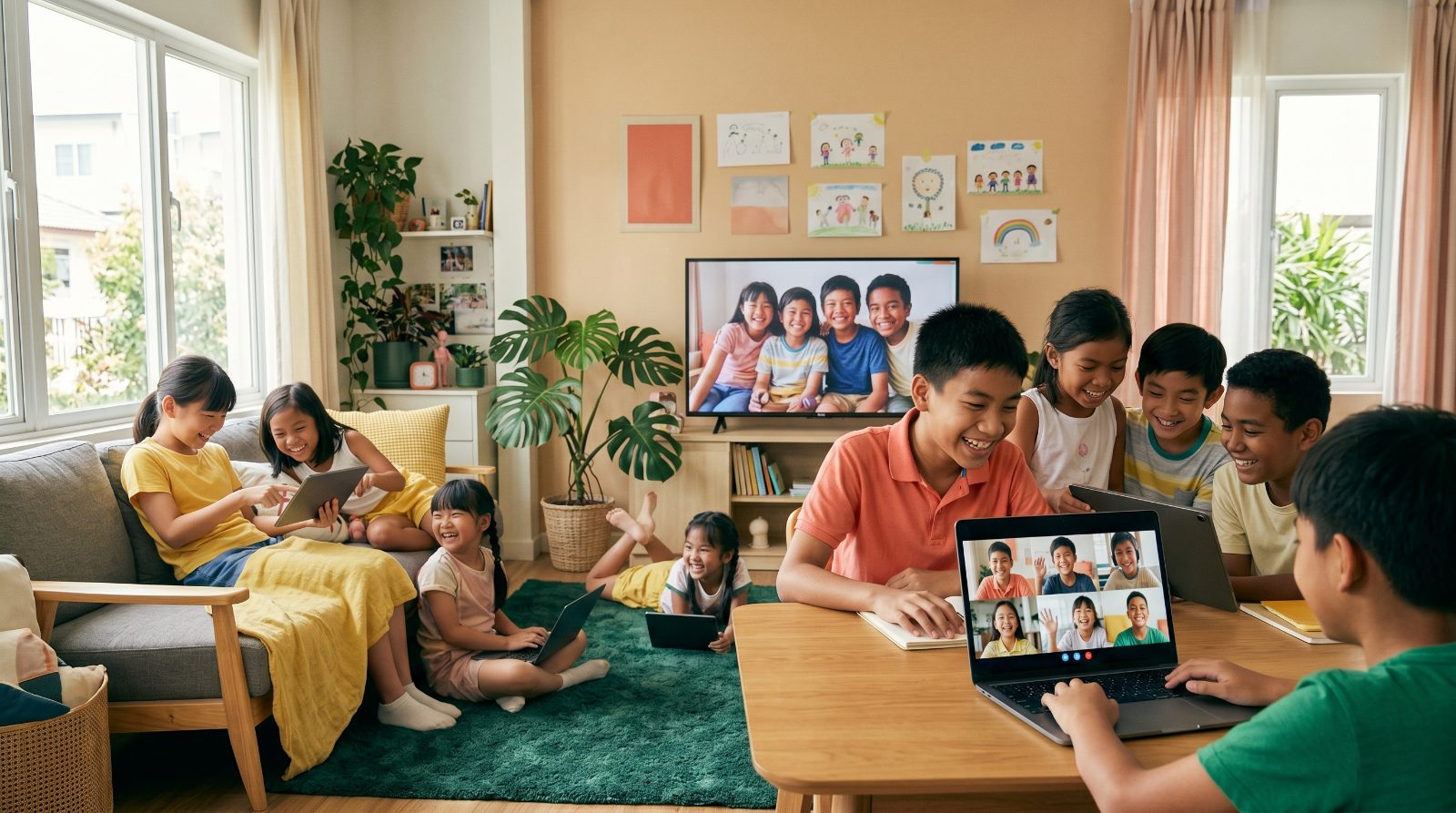
Most children in New Zealand go to their local state school. But two other options are also part of the picture: homeschooling, which more families have chosen in recent years, and schools that welcome students from overseas or offer international programmes. In this article, we look at how popular each one is, why families choose them, and what rules apply.
Homeschooling: a record number of children
As of July 2025, 11,010 children were being homeschooled in New Zealand, the highest number ever recorded. For many years the number stayed at around 5,500 to 6,000, but it started to rise in 2019 and jumped sharply in 2022, when more than 4,300 children started homeschooling in a single year. Since then, it has stayed at around 11,000.
Families have many reasons. Some found that learning at home worked well during the COVID-19 lockdowns. Others want to teach according to their own values, want a slower or faster pace for their child, or have a child who was unhappy or struggling at school. Children also come and go: in 2025, many children started homeschooling, while others went back to school, some after less than a year.
The rules: an exemption from school
In New Zealand, all children aged 6 to 16 must be enrolled in a registered school. To homeschool, parents need a “certificate of exemption” from the Ministry of Education. To get one, they must show that their child will be taught “at least as regularly and well” as in a registered school. They usually explain what and how they plan to teach, but they do not have to follow the national curriculum.
Once a child has an exemption, the family receives a small supervision allowance from the government each year (NZ$796 for the first child) and confirms twice a year that they are still homeschooling. In 2026, the government proposed stricter rules for checking on homeschooling families, but it paused the plan after strong feedback from homeschool groups and said it would consider the issue again in the future.
Homeschooling is different from Te Kura, New Zealand’s state distance-learning school. Students at Te Kura are enrolled in a school and follow lessons set by its teachers, while homeschooling families plan and teach the lessons themselves.
International schools and students from overseas
New Zealand does not have many schools that call themselves “international schools”. Instead, many regular state and private schools welcome students from overseas and teach them side by side with local children. From January to August 2025, about 18,500 international students were studying at New Zealand schools, around 10% more than the year before. Japan is one of the biggest source countries for international students in New Zealand.
Some schools also offer international programmes. About 20 to 25 schools are IB World Schools, and many more, such as the ACG schools in Auckland, offer Cambridge IGCSE and A Levels. These schools are mainly in Auckland, Wellington and Christchurch.
You might also like
Who chooses these options?
Schools with international programmes attract local families who want their children to have the option of studying at universities around the world, as well as families who have moved to New Zealand for work. Students from overseas often come to improve their English and experience life in New Zealand, sometimes for a term or a year, and sometimes until they finish high school. Homeschooling families, on the other hand, are often looking for a way of learning that fits their child and their values better than a regular classroom.
Both trends show that New Zealand families have more and more ways to choose how their children learn.
Connecting with students in New Zealand through NGA
New Zealand has many children learning at home, and many schools where local and overseas students learn together. Because NGA is an online school and New Zealand is only three to four hours ahead of Japan, it is easy for our students to have chances to interact with them.
For example, students could take online lessons together or give presentations in English about daily life and culture in each other’s countries. Talking in English with children their own age is an experience that is hard to get from classroom study alone. In the future, exchange programmes with schools in New Zealand are also a possibility.
We hope this article gives you a picture of how children in New Zealand are learning today.